The Memory of Bhārat Varsha
In the silence before the first dawn,
before birds, before breath, before the first script,
there was Nāda—the soundless sound.
And in that Nāda, there was a memory.
A memory not stored in stone or scroll—
but in the soul of the land.
That land was Bhārat.
And that memory is called the Jambudweep Mahāgāthā.
*“It is not I who write this story.
The land remembers, and I merely listen.”*
I did not set out to write a book.
I sat beside the river.
And the river spoke.
She did not speak in words,
but in tremors of time,
in winds that remembered names buried beneath centuries.
And so, I wrote.
But not as a writer.
As a listener.
The Dream That Wasn’t a Dream
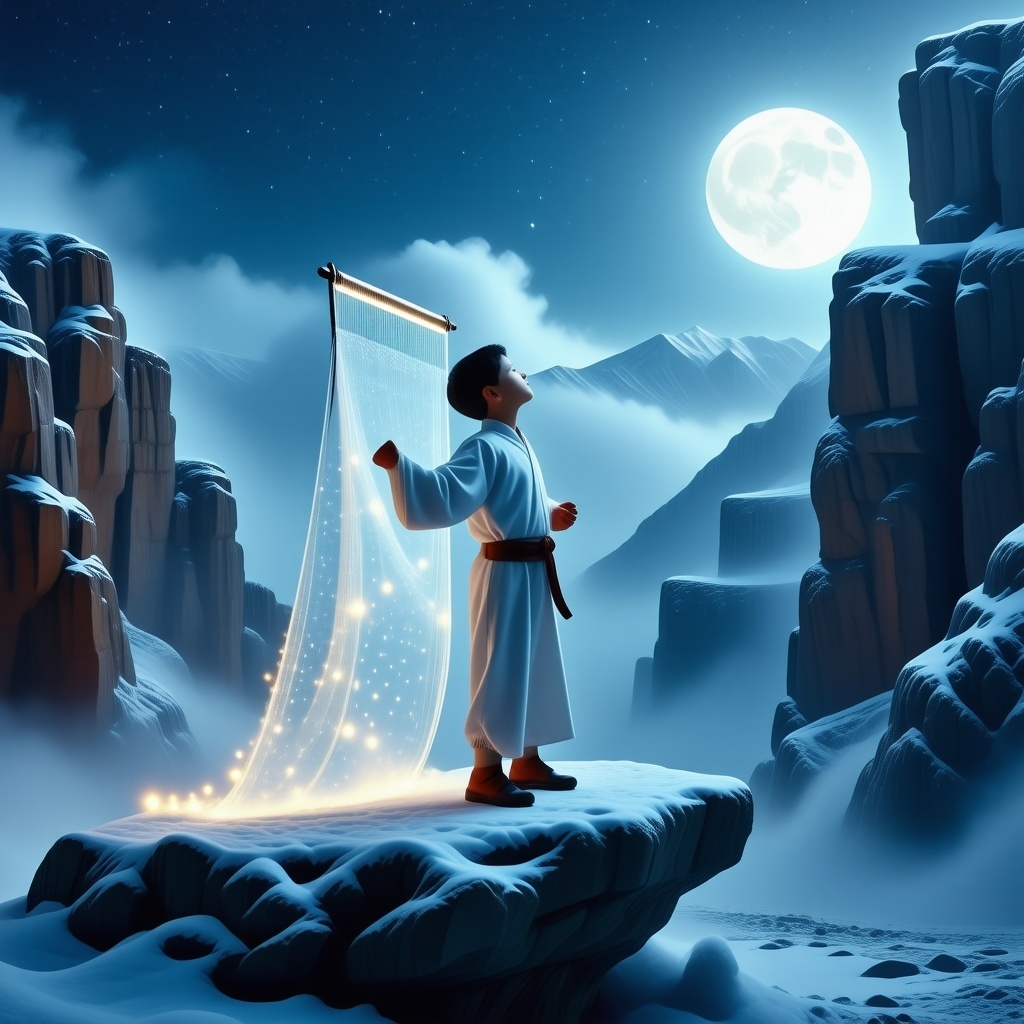
One night, under the cloak of moonlight and mist,
a boy in white stood atop a cliff in the Himalayas.
His eyes were closed, but his soul was open.
In his hands—a loom that shimmered like constellations.
He was weaving.
Not cloth.
But destiny.
His name drifted to me on the wings of silence:
Aryaman.
And in that single breath,
a universe uncoiled.
Aryaman was not a character.
He was a seed.
And from that seed would grow a forest of stories—
stories of rivers, sages, rebels, queens, and the wind itself.
Jambudweep is Not Fiction. It is Memory.
Jambudweep is the name given in the Puranas
to the sacred continent of Dharma.
It is not a place we find on modern maps.
It is a place we awaken within.
The Mahāgāthā is not just a retelling.
It is a resurrection.
Of timelines we forgot.
Of lineages erased.
Of looms abandoned.
Of cities buried beneath silence.
From the snow-covered cliffs of Kashyap Puri,
to the spice-laden ports of Chandravati,
to the thunder-swept steppes of Bhadra Varsha—
each region breathes with ancient pulse and cosmic intent.
This is not an epic.
It is a recovery of the rasa of a civilization.
Who Tells the Story?
Not a man. Not a king. Not even the author.
The story is told by Sindhu—the river eternal.
She has watched empires rise and fall.
She has held the ashes of yogis and the blood of kings.
She does not forget.
She flows across pages as a voice that remembers for us.
She does not narrate history.
She sings it.
She does not explain dharma.
She weaves it into your bones.
Sindhu is the true voice of the Jambudweep Mahāgāthā.
And in her voice, echoes all that once was—and still is.
The Form of the Story
The Mahāgāthā is written in a forgotten poetic style called Bhram Kāvyā—
where time is not linear,
where the wind can speak,
where fire carries memory,
and rivers hold prophecy.
It is interwoven with Nāda, rasa, and divine rhythm.
You will not just read it.
You will hear it in your inner ear.
You will feel its mantric beat beneath your skin.
It is not prose.
It is poetic invocation.
Not fantasy.
But symbolic truth.
Not a myth.
But a mirror for the sleeping soul of Bhārat.
Dharma Yuddha – The War Beyond Swords
At the heart of the Mahāgāthā is not a battle of kingdoms,
but a battle of truths.
This is a Dharma Yuddha—
a war between forgetting and remembering,
between conquest and creation,
between the darkness of ambition and the quiet fire of selfless action.
Aryaman, the Weaving King, never lifts a sword in pride.
He lifts threads, chants, maps, and mantras.
His loom becomes a weapon.
His silence becomes strategy.
His breath becomes battle cry.
He does not kill.
He revives.
He does not conquer.
He restores.
His army is made of farmers, monks, weavers, forgotten soldiers—
souls who awaken not through orders, but through bhāva.
This is the Yuddha we are all part of—today.
To protect the sacred.
To remember who we are.
To not fight for territory,
but for tattva—for truth.
This is the Mahāgāthā's deepest message:
the true war is always within.
Why This Story Must Be Told
Because we forgot.
We forgot who we are—not politically, but spiritually.
Not as citizens of a country, but as cells in the body of Bhārat Mata.
Our stories were not erased.
They were only silenced.
The world taught us to look forward.
But Bhārat teaches us to look inward and backward—
to recover what was sacred, sovereign, and soul-born.
This Mahāgāthā is a bridge—
between memory and modernity,
between myth and meaning,
between the forgotten future and the remembered past.
The 40-Year Yajña
Jambudweep Mahāgāthā is not one book.
It is a yajña of remembrance that I have vowed to complete over 40 years.
It will become:
108 Divine Epics of Bhārat
500 Music Albums of Nāda
108 River Stotras from all rivers of the world
108 Books of Self-Transformation
Audiobooks, films, scrolls, NFTs, and a Metaverse of Memory
This is not a publishing plan.
It is prāyaśchitta.
A sacred offering to Bhārat Mata.
Every chapter is a lamp lit.
Every verse is a step closer to truth.
The Story of the Story
So when someone asks,
“What is this Jambudweep Mahāgāthā?”
I say:
“It is Bhārat remembering herself.
Through the breath of a Bhoomiputra.
Through rivers who weep.
Through a loom that never stopped spinning.”
The Book That Reads You
You do not read this story.
This story reads you.
It listens to your soul.
And shows you who you were—before schools, before titles, before forgetting.
It will not entertain you.
It will awaken you.
It will not dazzle you.
It will initiate you.
Into a memory beyond time.
Into a dharma beyond dogma.
Into a Bhārat beyond boundaries.
The Jambudweep Mahāgāthā is not coming.
It has already begun.






 React
React