It was a warm summer evening. Poovizhi had just returned from a vacation and was feeling inspired to take life by the reins and try something new. She hadn’t yet gotten back to work and wanted to tap into this reinvigorated spirit of hers before the many professional responsibilities rained down on her. She opens up a new packet of agarbatti that she had picked up; it was a beautiful jasmine fragrance, her favourite. She lights it up and watches the flame flicker for some time before it dies down.
Taking in the fragrance, she picks up her notebook and favourite pen and heads to the dining table and positions herself on her dining room chair. Even though Poovizhi has an antique desk to write on, the chair that came with it never felt comfortable, and she refuses to admit that out loud. So the dining room table and chair it was.
It was one of those humid evenings when it felt like the air was pressing down on her head. She shook her head, cleared her mind, and opened a fresh page. She had been wanting to pen down her thoughts about fleeting memories and fragrances, about how fragile human existence is and how humans manage to change so much with that fragility. She wanted to write about her existence, a journey she felt grateful for and depressed about. The vacation had changed things for her, and she found herself seriously considering an idea that she had up until then been toying with - to write a book. Or rather, to document her story, to present a picture of her that no one seems to know or understand. But, where do I start? she thinks out loud. A whiff of the jasmine in the air sets things in motion.
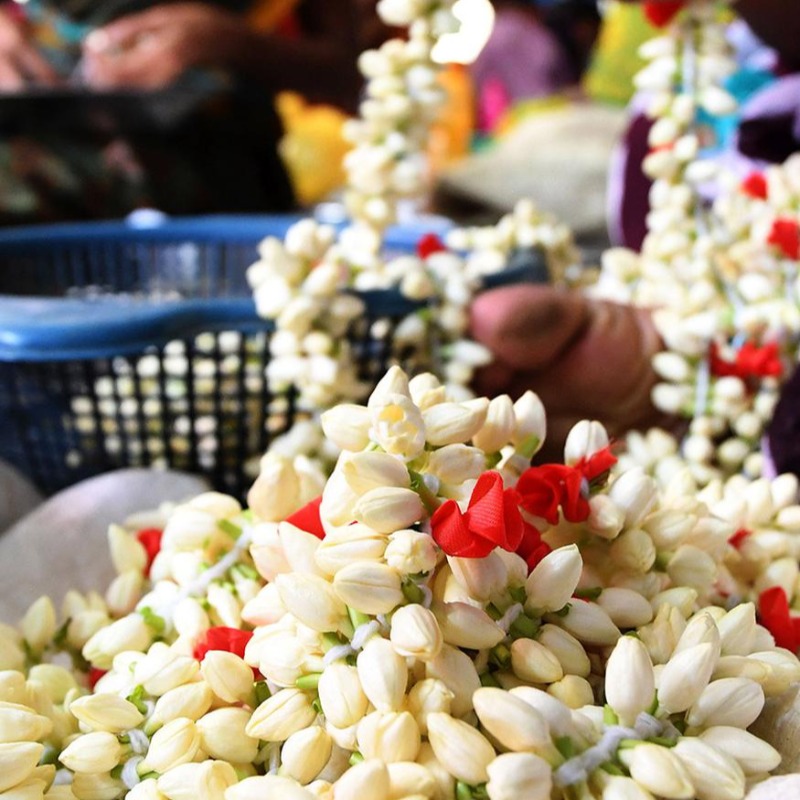
“Growing up, I used to love wearing flowers on my head,” she starts. “My ammamma (grandmother) still teases me about how I would wear a muzham (a unit of length based on the length of the forearm) of jasmine flowers on my tiny head! Apparently, I used to ask for flowers every day. I have no memory of this, but I choose to relive these days through the stories my ammamma tells me. In fact, most of my childhood memories have been suppressed, and I remember next to nothing of my early childhood years. What I do remember is all the phases of life I have crossed, and the changes in perceptions that I have experienced. I have had difficult relationships with myself, family, and friends, and I seem to take on a different path in each phase of my life; paths that continue to surprise me.”
“Somewhere along the way, I seem to have lost my fondness for, among other things, wearing flowers and started to abhor the idea. I still loved them, but just not on my head. I would reject any offers of wearing them and would maintain that I had grown out of them. There were times when my hair was cut and styled in a certain way that the flowers wouldn’t be able to sit for even a few minutes. Slowly, I broke up with the flowers and was content just looking at them from a distance.”
“Over the years, my understanding of the self and the world around me has changed. It also changed how I perceived those jasmine flowers. I loved watching older women walking around with fresh flowers on their heads, smiling and going about their day. I think about how beautiful they looked, so fresh, calm, and kind, with their turmeric-laden faces and their sarees. Suddenly, I found myself wanting to wear flowers in my hair again. I started waiting for occasions that would offer me this chance, as I still wasn’t brave enough to simply wear them on any given day. I began seeing the flowers with fresh eyes...”
Poovizhi pauses. The agarbatti was nearing its end, and the jasmine scent was now becoming faint. She was feeling hungry and decided to have an early dinner. There was dosa maavu (batter) in the refrigerator that was nearing its end as well. She put aside the notebook and got to cooking her dinner. After finishing dinner and cleaning the dishes, she sat back to continue writing her story. But, her mind was now swimming in several thoughts - the work plan for the next day, lunch menu - and she found it difficult to get back to the story she was writing. She decided to try out a jasmine-flavoured essential oil this time. The fragrance was much stronger than the agarbatti, and she caught herself smiling. Her mind seemed to race, and she continued where she left off.
“...with fresh eyes, or should I say a fresh mind? I began to see the flower as a symbol of my culture and identity. I loved how I looked with the jasmine flowers, and I began reaching for other flowers as well. There was this one time where I chose a kadhamba poo, which was different varieties of flowers strung together. As I was styling this bunch in my hair, I remembered reading an article about how women factory workers in Tamil Nadu wear flowers in their hair to serve as a ‘source of joy and resilience’. My struggles are nothing compared to them, but maybe my heart wants a piece of this joy and resilience, I wonder.”
Poovizhi put her pen down and felt renewed. She was still not sure if she wanted the world to read her inner thoughts, but she was glad that she could read them.
As she settled into her bed later that night, she reached out for the novel that she was reading. Flicking the pages, she finds a jasmine flower. It had wilted and was now a light shade of brown as opposed to the white it is when in full bloom. Poovizhi picks it up and brings it closer to her nose. A faint, musty smell greeted her.






 React
React