It was just past 9 p.m. on a rainy Thursday when the knock came.
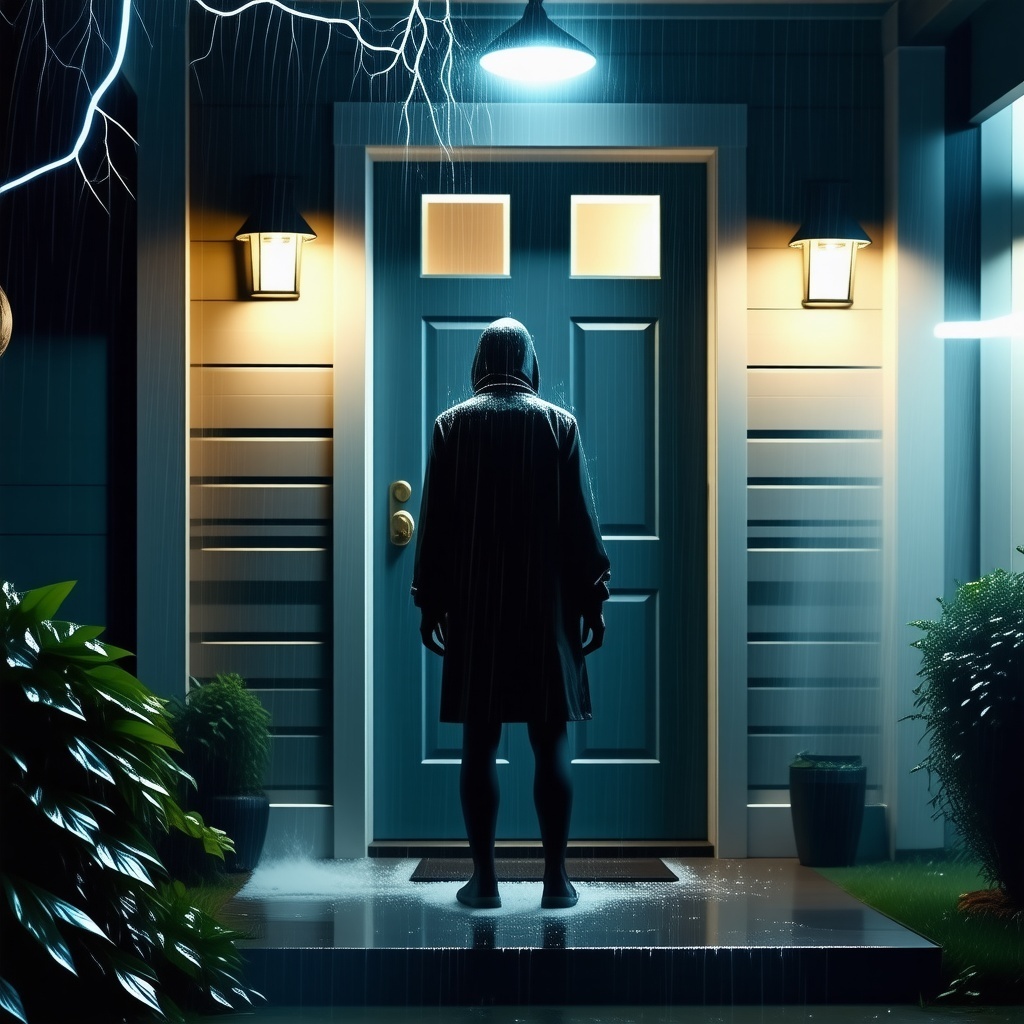
I was curled up on the couch, half-asleep, a lukewarm mug of chamomile tea balanced on the armrest. Outside, the storm had been raging for hours—thunder rumbled like a warning, and rain clawed at the windows like it was desperate to be let in. The knock didn’t fit the rhythm of the storm. It was sharp. Deliberate.
Three knocks. A pause. Then two more.
I sat up, my heart skipping a beat.
Who comes knocking in the middle of a thunderstorm?
For a moment, I just stared at the door, as if it might answer the question for me. I live alone, in a little house just outside of town—the kind people call “quaint” because it's old, covered in ivy, and surrounded by woods. It’s peaceful most of the time. But suddenly, that peace felt like isolation. Vulnerability.
The knock came again. Louder.
I grabbed my phone and crept toward the door. No missed calls. No texts. Nothing. The porch light flickered as I reached for the handle, and for a second, I considered not opening it.
But curiosity—and a sliver of concern—won out.
I opened the door.
A man stood there, soaked from head to toe, rain dripping from his jacket and pooling at his feet. He looked like he’d walked through a river—mud on his jeans, hair stuck to his forehead, breathing hard. He wasn’t threatening, but he wasn’t exactly friendly either.
“I’m sorry to bother you,” he said quickly, eyes scanning my porch like he expected someone to be following him. “My car broke down a few miles back. No signal. I didn’t know where else to go.”
I hesitated. Everything inside me was screaming caution. But he looked exhausted. Desperate. And something about his voice—it didn’t sound like someone playing a part. It sounded... real.
“You’re lucky I heard you over the storm,” I said slowly.
He gave a faint smile, though it didn’t reach his eyes. “Yeah. Lucky.”
“Do you want to use my phone?”
“If that’s okay. Just for a minute. I won’t stay.”
I handed it to him. He dialed quickly, nervously. It rang. Once. Twice. Then—
“Voicemail,” he muttered and hung up. “I guess no one’s home.”
“You want me to call someone else? The police? Tow truck?”
He looked up sharply at the word “police.” “No. No, that’s fine. I don’t want to cause trouble. I just... I need a second to think.”
His hands were shaking slightly. From the cold? Or something else?
I noticed something on his collar. A dark stain.
“You’re hurt.”
He touched the spot like he hadn’t noticed it. Looked at his fingers.
“It’s not mine,” he said.
My heart sank.
“Whose is it?”
He looked at me then, really looked, like he was weighing whether to lie or tell the truth. Then the power went out.
The lights snapped off. The heater died. Silence rushed in.
And then the rain again. Louder. Closer.
I turned on a flashlight I kept near the door. The man didn’t move.
“I need you to explain what’s going on,” I said.
He swallowed hard. “I wasn’t driving. I was in the passenger seat. My friend, David—we hit something. I don’t know what. Maybe someone. It was dark. There was blood. A lot. But no body.”
I stared.
“We stopped. Got out. I said we had to call the cops. He panicked. Said we should leave it. That’s when he... he hit me. Threw me out of the car. Took off.”
“And the blood?”
He hesitated. “I tried to check if someone was there. The blood got on me. But I didn’t find anyone. I think he did... something.”
His voice broke.
“You walked here in this storm?”
“I didn’t know where else to go.”
I considered calling 911. But I had no signal either. I also couldn’t ignore the rising instinct in me: something wasn’t right.
“There’s a towel in the bathroom. Down the hall, first door on the right,” I said. “Dry off.”
He nodded and shuffled off. I waited until he was out of sight and rushed to the front window. Something had caught my eye earlier—and now I saw it clearly.
Footprints. Two sets. One led up to my door.
The other led away. But not toward the road.
Toward the woods.
“Hey!” I called down the hallway. “What did you say your name was?”
Silence.
I moved cautiously down the hall with the flashlight.
The bathroom door was open. The towel was still folded on the counter.
He was gone.
My heart pounded. I checked the guest bedroom. Empty.
I turned to head back—
And he was standing there in the living room.
Only now, he was holding something.
A knife.
Not a kitchen knife—a hunting blade. Long. Curved. Stained dark.
“I’m sorry,” he whispered. “I wasn’t lying. Not entirely.”
I froze. “What do you mean?”
He looked pale. Haunted.
“He wasn’t my friend. David. He was... the man who took my sister.”
I blinked. “What?”
“Three years ago. She disappeared outside of Cedar Falls. No trace. Until a month ago, I saw him. Driving her old car. Wearing her necklace. I followed him. Waited. And tonight, I confronted him. He laughed. Said she begged. I—I lost it.”
He dropped the knife on the rug. It thudded softly.
“I didn’t plan to. But I needed him to tell me where she was. He attacked me. I turned the knife on him.”
I should’ve called the cops. But something stopped me.
“What did you do with the body?”
“I left him in the car. I drove it off the road. Into the ravine near the woods. Lit it on fire. I didn’t know what else to do.”
We were silent for a long moment.
Then I picked up the knife and walked to the kitchen. Wrapped it in a towel. Hid it.
“Go,” I said quietly. “Take the trail through the woods. It’ll lead to the old train station. You’ll find someone there.”
He stared at me, wide-eyed. “Why are you helping me?”
I didn’t know. Maybe it was the look in his eyes. Maybe it was that he’d gotten justice no one else would’ve.
Or maybe, I just understood what it was like to be completely alone.
“Go,” I repeated.
He nodded once. Then slipped into the storm.
Two days later, the police came by. A hiker had found a wrecked, burned car in the ravine. Inside was the body of a man known to authorities—a history of violence, linked to multiple missing persons cases.
Including a girl named Emily. The sister of a man no one had seen in years.
They never found the man.
Or the knife.
And I never told anyone what happened that night.
Until now.






 React
React