It was a dry, dusty afternoon in the middle of October. The kind where sunlight stretches lazily through the windows, painting golden stripes on the old wooden floors. I had just returned from the market and was halfway through unpacking vegetables when the knock came.
Three knocks. Firm, unhurried, almost rehearsed.
I paused, hands still gripping the paper bag. The knock wasn’t from the delivery man. It wasn’t my neighbor’s light tap. This was different. I walked toward the door, heart thudding a little harder than usual, and peeked through the peephole.
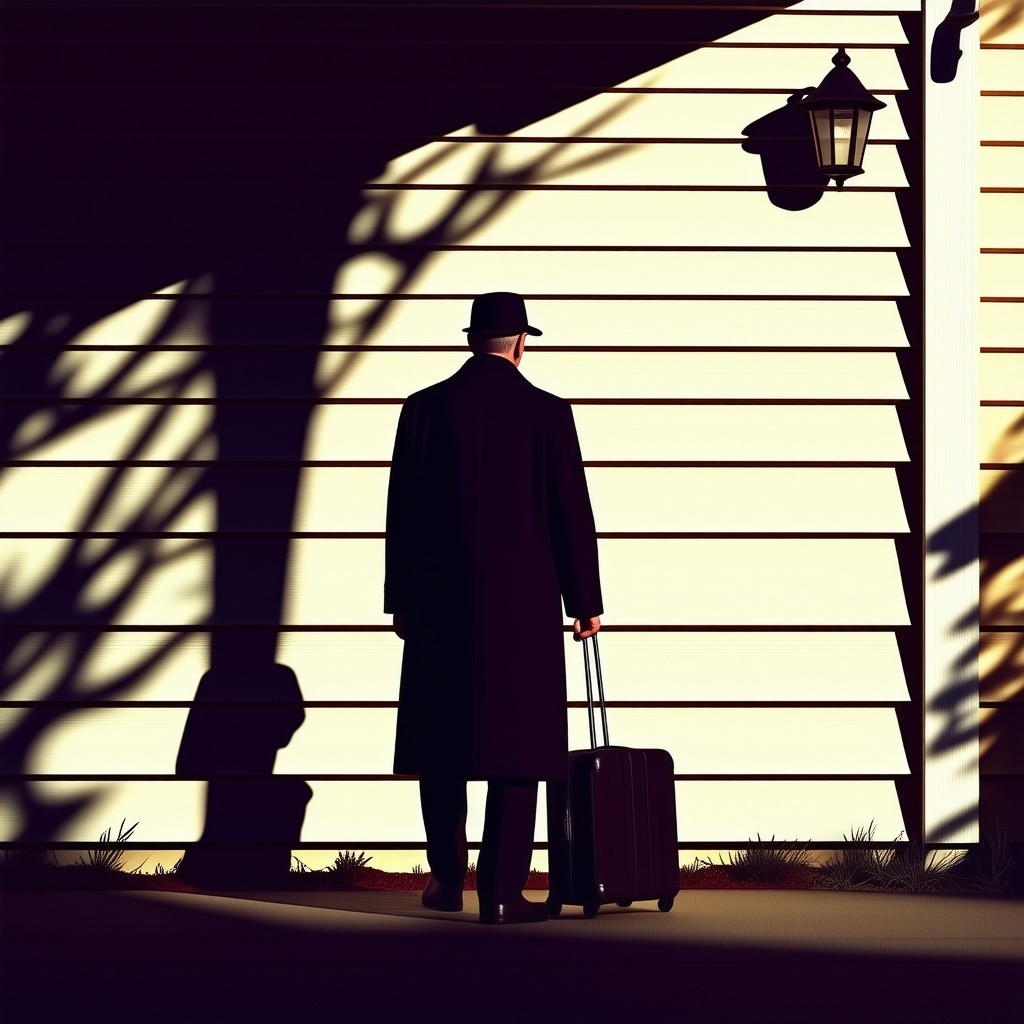
There stood a man, tall and still, with a suitcase resting by his foot. He wore a long dark coat despite the heat, and a cap shadowed most of his face. My instinct was to turn away. But something about his stance, his stillness, kept me there. I unlocked the door but left the chain on.
“Can I help you?”
He raised his head slowly. His eyes were gray, tired, and distant, as if he'd walked miles through time rather than streets.
“I’m sorry to bother you,” he said. “But this house once belonged to my grandfather. Emil Roshan. I grew up hearing stories about this place. May I step in for a few minutes? Just to see it once.”
My first instinct was suspicion. But something about the name tickled a memory. I told him to wait and rummaged through a drawer where I kept old house documents. And there it was, among crumbling pages: Emil Roshan. Owner of the property until 1983.
I opened the door fully.
“Five minutes,” I said.
He entered with reverence. His eyes scanned the hallway, the worn wallpaper, the furniture like he was rediscovering a forgotten photograph. He paused at the living room window and smiled faintly.
“He used to sit here. Every morning. With his radio, humming songs he never quite remembered the lyrics to.”
I watched, silent. He wasn’t acting. Every gesture, every pause felt real. Not rehearsed. Not fake. He took out a small wooden box from his suitcase, placed it gently on the coffee table.
“This belonged to him. I think it should stay here. This house deserves to keep it.”
Before I could ask anything, he gave a small nod and left, walking down the road until he disappeared. No name. No explanation.
I stared at the box for a long time before opening it. Inside was a faded photograph of a man by the window, smiling with a small radio beside him. There was also a letter.
To the Keeper of This House,
If you find this, then perhaps you are meant to. I was forced into decisions I regret every day. They came for the land. For the people who had nothing else. They used me to sign it all away. I had no choice. But the truth is hidden. Under the study floor. Maybe you’ll be braver than I was.
That night, I barely slept. The letter haunted me. What truth had he buried beneath these floors? By morning, I took a flashlight and a crowbar to the study. I tapped around until I found a hollow thud beneath the rug. Pulling the rug back, I pried open a loose plank.
Inside was a wrapped bundle of documents. Old, yellowed, and brittle. But legible.
Land deeds. Maps. Signatures. Names of families. All showing the sale of vast properties under duress, with Emil Roshan as the witness. It painted a picture of deceit and coercion.
I contacted Maya, an investigative journalist and old friend. She arrived within hours, stunned by what I showed her.
“This could blow open decades of corruption,” she said. “Developers still profit from this land.”
We scanned everything and submitted it to national archives and media outlets. The story made headlines. Families that had been displaced began to speak. Protests followed. Legal actions ensued. Some of the accused were still alive and now finally faced justice.
But the man who brought the box never returned. I tried writing to the P.O. box he had scribbled on the back of the letter, but there was no reply.
Months passed.
Then, a parcel arrived. No sender. Just an address in Marrow Bay, California. Inside was a leather journal and a short note:
"You gave my grandfather his redemption. He lived with guilt, and you let him be heard. This journal belongs to you now. Thank you. — L.R."
The journal was filled with entries by Emil Roshan. Pages of pain, fear, and regret. One passage stood out:
"I dream someone will find my box. Not to judge me. But to know I wasn’t a monster. Just a man afraid to lose his family. Maybe they'll do what I couldn’t."
I closed the journal with a deep breath. The house felt lighter. As though it had been waiting for someone to listen.
Sometimes, in the evenings, I still play the radio by the window. Quietly. Just enough to feel the hum of memory and the hope that someone, somewhere, hears it.
And every so often, I glance at the road, half-expecting a familiar silhouette with a suitcase.
Because some doors don’t just open to strangers.
They open to truths, to ghosts, to redemption.
And you never forget the day a stranger comes to your door—and leaves behind a story that changes everything.
.






 React
React