In the sleepy village of Everwill, tucked between a velvet-green hillside and a forest that whispered old songs, lived Eleanor Finch and Thomas Hale—two people who once knew love, lost it, and found something better: peace.
Their story wasn’t stitched in fiery romance or dramatic declarations, but in the quiet rhythm of lives slowly entwined. Eleanor, once a schoolteacher in the bustling city, had arrived in Everwill at fifty-two, hair already silvering, heart tender with grief. Her husband had passed unexpectedly, and the city that once pulsed with memories now echoed with absence. So she left, with nothing but a suitcase, a tin of Earl Grey, and her late husband’s favorite fountain pen.
She found Everwill by accident—or fate. A missed train. A wrong turn. A kind innkeeper named Mrs. Winthrop who offered her a room and a bowl of leek soup. Days became weeks. The quiet of the village, with its mossy walls and flower-choked fences, cradled her aching soul.
Thomas Hale was a man made of silence and sawdust. A widower, carpenter, and owner of a modest orchard that had belonged to his family for three generations. He was known for two things: his unparalleled apple preserves and his refusal to attend town gatherings. Locals called him “the mountain fox”—aloof, gruff, and hard to spot unless you wandered too close to his orchard fence.
It was a stray cat that brought them together. Eleanor had been feeding the tabby behind the inn when it darted off one morning, disappearing beyond the ridge. She followed, only to find herself trespassing—face to face with Thomas Hale, holding a basket of apples and looking profoundly unimpressed.
“People don’t usually cross this fence,” he said.
“I don’t usually chase cats either,” Eleanor replied, adjusting her scarf.
He blinked. Then, to her surprise, smiled. “Well. I suppose exceptions make the world spin.”
From that day, the orchard became part of her routine. She would pass by, sometimes with biscuits, sometimes with stories. He would offer tea and apples, and occasionally a freshly carved birdhouse or wooden spoon left at her doorstep, wordlessly.
They didn’t fall in love—not at first. They fell into companionship.
Eleanor began teaching again, part-time at the village school. Thomas mended fences and built cradles for new babies. Seasons passed. The orchard bloomed and withered and bloomed again. When Thomas caught pneumonia one winter, Eleanor nursed him with stern affection. When Eleanor fell and fractured her wrist, Thomas brought her handwritten poems each morning—clumsy but sweet.
At sixty, they married. Quietly. Beneath the apple trees, with petals as confetti and the cat as ring bearer.
Everyone in Everwill agreed it was the most romantic non-romantic wedding they’d ever attended.
But the real story began after that.
You see, “happily ever after” isn’t a moment—it’s a mosaic. Not a grand finale, but a series of gentle seconds stitched by kindness, choice, and the quiet insistence on joy.
And so, Eleanor and Thomas built their ever after.
They painted the cottage on the orchard’s edge a warm cream, planted lavender by the windows, and hosted Sunday teas for whoever wandered by. Eleanor wrote letters for villagers who couldn’t read, and Thomas carved toys for children whose parents couldn’t afford gifts.
In spring, they hosted an apple blossom picnic, where neighbors tied wishes to trees with ribbon.
In summer, they churned ice cream in the shade, playing old vinyl records on a gramophone Eleanor had rescued.
In autumn, Thomas led cider-making workshops, while Eleanor told ghost stories that made even the mayor sleep with a candle.
And in winter, their cottage glowed like a lantern. Warm food. Warmer smiles. A fire always crackling, and always enough space for someone to sit by it.
Years passed, but the orchard at Everwill became something more than land and fruit—it became legend.
Children said the trees whispered your secrets kindly.
Travelers said the air healed old heartbreaks.
And everyone said that Eleanor and Thomas were proof that life didn’t end at loss—it only paused.
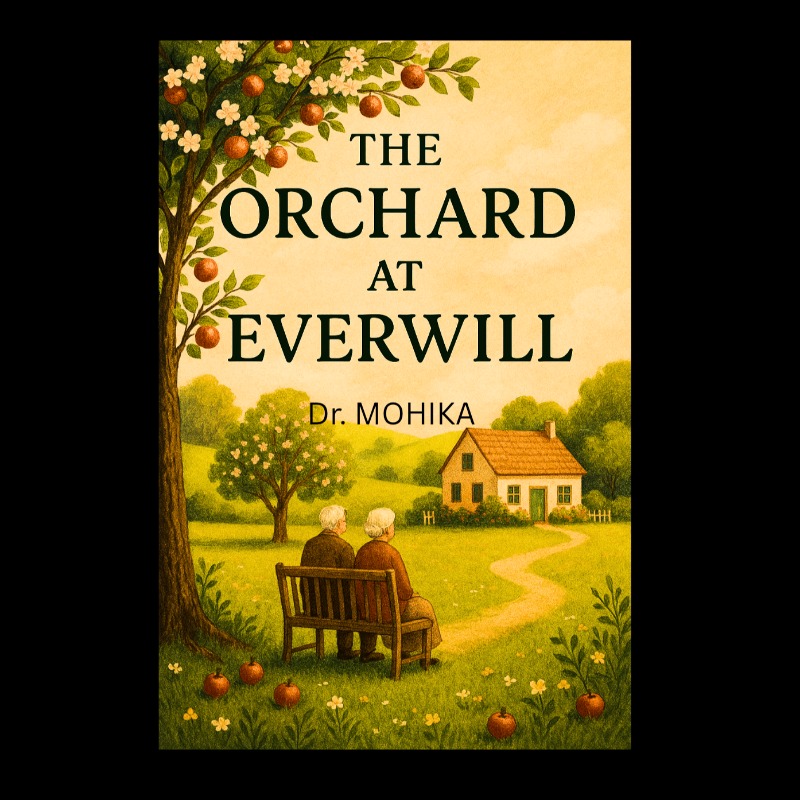
Even when Eleanor grew frail, when her hands trembled and her memory faltered, she still walked with Thomas to the edge of the orchard each morning. They sat on the old bench he’d carved with their initials and watched the light paint the trees golden.
“Do you remember the cat?” she’d ask.
“Every time I eat apple pie,” he’d say.
When Eleanor passed, the entire village mourned. But Thomas didn’t withdraw. He opened the orchard that spring wider than ever before. He invited the schoolchildren to plant a new tree—a rose apple sapling in Eleanor’s name. He carved a bench beside it that read:
“Where joy sat quietly and grew roots.”
He lived five more years—long, contented ones. When he passed, he was found with a book of Eleanor’s poetry on his lap and apple blossoms at his feet.
And though both were gone, their ever after lingered.
The orchard still stands. The cottage, now a public library and tea house, welcomes wanderers. The schoolchildren still plant trees every spring. And the bench beneath Eleanor’s tree is rarely empty.
Because the truth is this:
Happily ever after isn’t always about a prince or a rescue or a dramatic arc. Sometimes, it’s a second chapter.
Sometimes, it’s a quiet orchard, a carved spoon, a cup of tea, and someone who remembers your stories—even when you forget.
It’s choosing kindness every day.
And that’s the most magical ever after there is.






 React
React