It started with three knocks.
Not loud. Not soft. Just enough to make me freeze mid-bite, spoon halfway to my mouth, as if time had paused for this exact moment.
I glanced at the clock. 9:47 p.m.
Too late for deliveries. Too early for emergencies. And I wasn’t expecting anyone.
For a few seconds, I sat still at the dining table, unsure if I imagined it.
Then it came again. Three slow, steady knocks.
I stood up cautiously. The hallway to the door suddenly felt longer than usual. My fingers brushed the switch near the entrance, flooding the corridor with warm yellow light. I looked through the peephole.
A man stood on the porch.
Dark coat. No umbrella. Hands by his side. Not threatening, not familiar. Just… waiting.
I hesitated. Then, against better judgment, I opened the door—but only halfway.
“Yes?” I asked.
His eyes met mine instantly. Calm. Focused. He looked around forty, maybe younger. Not a trace of anxiety in his expression. It was like he’d been here before.
“I know this is strange,” he said. “But I need to speak with you. Just for a few minutes. May I come in?”
I blinked. “I’m sorry, but… do I know you?”
He gave a small, almost sad smile. “Not yet.”
That answer was weird—but not in a scary way. More like something from a dream I’d forgotten.
I should’ve shut the door.
Instead, I opened it wider.
“Alright. Come in.”
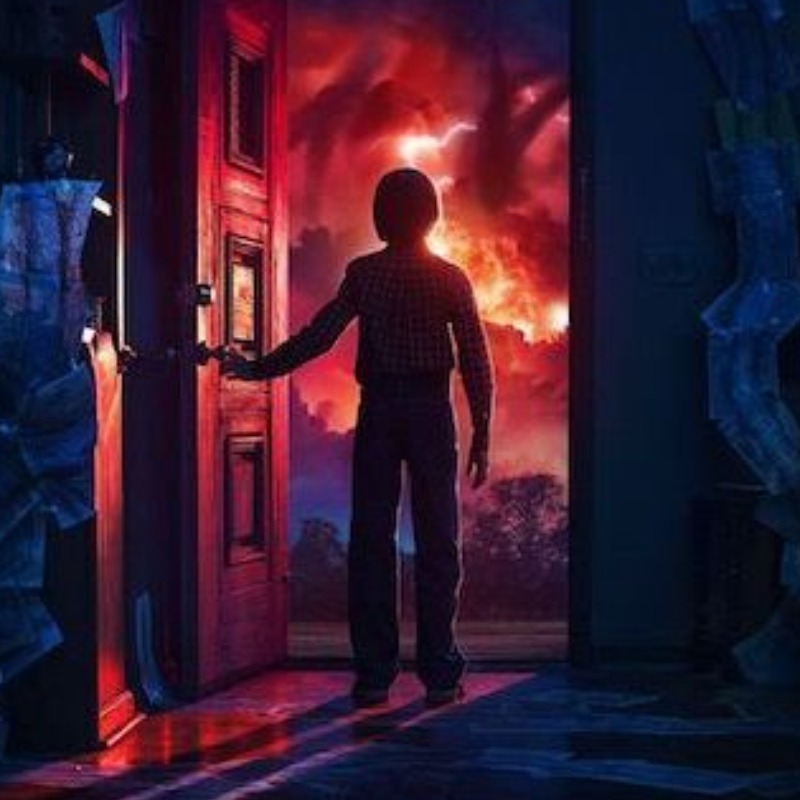
He stepped inside without hesitation, like he belonged. The air shifted as he entered, colder somehow, like he carried a piece of outside with him.
He didn’t glance around the room. Didn’t take off his coat. Just went straight to the table, pulled something from his pocket, and placed it on the surface.
A notebook.
Leather-bound. Old. Worn around the edges.
“What’s that?” I asked.
“It’s yours,” he said simply.
I raised an eyebrow. “I’ve never seen it before.”
He flipped it open without asking, revealing pages filled with handwriting. My handwriting.
The exact slant of my letters. The way I curl my lowercase 'g's. Even the odd little circles I put over my i’s when I’m thinking fast.
I stepped closer. My heart jumped.
These were my stories.
Ideas I’d written in my phone but never finished. A poem I started and deleted. A paragraph I scribbled in a notebook five years ago and forgot.
“How did you get this?” I asked, my voice low. “Did someone hack me or something?”
“No,” he said. “This isn’t from your past.”
He looked at me, serious now.
“It’s from your future.”
My breath caught. “What?”
He sat down, calm like this was normal.
“You’re a writer,” he said. “Or at least, you were supposed to be. You had stories to tell. Important ones. But you stopped. Life got in the way. Fear. Doubt. The usual things.”
I didn’t respond. He was right—but he shouldn’t know that.
He continued, flipping to a particular page.
“This story,” he said, pointing. “You never finished it. But in another version of your life, you did. You published it. Someone read it. And it changed them. It stopped them from making a mistake they couldn’t undo.”
I stared at the words. I remembered this piece. It was about loss. About someone deciding not to give up after everything went wrong.
“I never finished it because I thought it wasn’t good enough,” I admitted.
“And that’s exactly why it mattered,” he said softly. “Because it was honest.”
I didn’t know what to say. My mind was racing. Who was this man? Was this a prank? A setup? Some sort of strange therapy?
“I don’t understand,” I said. “Who are you?”
He met my gaze again.
“I’m you,” he said. “A version of you. From a life where you didn’t stop. Where you didn’t give up on your voice.”
That silenced me.
He stood slowly.
“You don’t have to believe me,” he said. “But I came to give you a choice. Rewrite the story. Share it. Do something with the words that still live inside you.”
I looked down at the notebook. The ink was fresh, but the paper felt ancient. Like it had traveled a long way.
“And if I don’t?” I asked quietly.
He paused.
“Then something important fades,” he said. “Not all at once. But slowly. Someone close to you will forget a part of you that mattered. And you won’t even notice—until it’s gone.”
He walked to the door. Before leaving, he turned back once more.
“Not everyone gets a second chance,” he said. “Take this one.”
And then, he was gone.
No sound. No footsteps down the hall. Just gone, like a dream slipping away with the morning.
I rushed to the window. Nothing. No car. No figure on the street.
Only rain, finally falling, soft and steady.
I sat back at the table, heart still pounding.
The notebook was still there.
Beside it: a pen. Uncapped. Waiting.
And the clock on the wall?
It had stopped.
I picked up the pen. My fingers trembled.
The notebook lay open to that half-finished story—the one I had started during a long winter night three years ago. I remembered every line, every doubt. I had poured my heart into it, only to let fear stop me.
I sat down.
The rain outside grew louder, steady like a clock I could no longer hear ticking. I stared at the page. Then, I wrote.
One word.
Then another.
And suddenly, it was like breathing again.
The words didn’t come perfectly. Some scratched. Some flowed. But they came. And with each line, I felt something return—something.
Weeks passed.
I kept writing.
The notebook never seemed to run out of pages. The more I wrote, the more it seemed to give back—like it had been waiting for me all along. Stories that once sat buried beneath excuses started to bloom. I found myself waking up early, staying up late, chasing words I thought I’d lost.
One morning, while editing a short story I had once abandoned, I noticed something strange on the last page.
A sentence in handwriting that wasn’t mine:
“You’re almost there. Don’t stop now.”
I stared at it for a long time. It didn’t scare me. It felt… familiar. Encouraging. Like a whisper from a version of me still rooting from some far-off place.
And then I understood.
Maybe the stranger had never truly left.
Maybe he was still here—in the words, in the courage, in the still moments where the world fades and the page waits.
Months later, I submitted my first finished story.
It didn’t win an award.






 React
React