It was one of those rare winter nights that almost made me forget the world outside existed.
A fire crackled in the hearth, and my laptop rested beside me on the couch, untouched. I cradled a mug of hot chocolate—my version of dessert—and stared at the ceiling, waiting for the words to find me.
They hadn’t yet, and I didn’t mind. I liked the quiet. That’s why I came here, to my family’s cabin, nestled deep in the woods.
And then came the knock at the door—so out of place, almost like a mistake.
No one should be here. Only a handful of people even knew I was staying at the cabin. A chill ran down my spine, and it wasn’t from the cold.
I approached the door cautiously, and through the frosted windowpane, I saw the silhouette of a man—tall, broad-shouldered, still as stone beneath the porch light.
I opened the door, and that’s when I saw him.
He had striking green eyes, sharp and searching. A handsome face, in a rugged, dangerous sort of way. The kind of man who made you want to look twice, but also made you question why.
Before I could speak, he offered a small, unreadable smile.
“Good evening, ma’am,” he said, pulling something from his coat pocket—a badge, polished so bright it caught the porch light and shone in my eyes. “Detective Mark Wade. Mind if I step in for a moment?”
His voice was calm, steady—like he’d said those exact words a thousand times before, and meant them every single time.
I hesitated. Not because I felt threatened, but because I didn’t. That scared me more.
He waited. No pressure. Just patient eyes in the cold.
I stepped aside.
“Thank you,” he said and walked in like he belonged in a story I hadn’t written yet.
The door clicked shut behind us. Inside, the fire cast a dancing shadow across the room. He glanced at it, then turned back to me.
“And you are?”
I almost laughed. “You knocked on my door, remember?”
His lip curved slightly. “Fair point.”
“Avril Williams,” I said.
“Avril,” he echoed, like he was trying the name on for weight—or memory. He then sat on the edge of the couch like someone who didn’t want to get too comfortable.
I folded my arms, waiting for the answer that never came. So I had to ask the question.
“What brings you out here in this weather, detective?”
He chuckled like that wasn’t important—but wasn’t it? Then his smile faded.
“I’ll tell you,” he said softly, “but I need you to stay calm.”
That stopped me cold.
“There’s a man on the loose. A dangerous man. We believe he’s hiding somewhere in these woods. We’ve got teams searching the woods. I’m here to alert residents—keep you safe.”
There was something about the way he said safe, like it mattered to him.
I stood there for a moment, trying to process it all. A million thoughts crowded my mind, but none found words. He must’ve seen it on my face.
“It’s under control,” he added. “My team’s out there now. Once I get the signal, you can go back to your normal life.”
He was vague. Too vague. But I didn’t push—not yet.
He stayed, and the minutes passed into an hour. The silence grew softer, and slowly, we began to talk.
“So,” he asked, watching me from across the room, “you always come here to write?”
I raised an eyebrow. “How did you—”
He gestured to my sprawled late-night work setup. “Educated guess.”
“I come here when I need to unplug,” I said slowly. “Too many distractions in the city. This place helps me think.”
“What do you write?”
“Whatever my pen wills, really.”
He smiled, amused. “You strike me as someone who likes puzzles.”
“Maybe. What about you?” I countered. “Always work cases in the middle of nowhere?”
He leaned back. “This one’s… personal.”
He didn’t blink. But something flickered in his eyes, like he was holding back more than he said.
The warmth from the fireplace filled the silence between us. Another hour slipped by.
“I guess it’s going to be a long night,” I muttered, rising from the couch. “Some tea?”
He gave a small nod. “Sounds good.”
I moved to the kitchen, the kettle already half full from earlier. As the water began to heat, I glanced at him. He was still seated, staring at his phone, jaw tense. It was subtle, but I could tell—he was waiting for something. A message or a call that hadn’t come yet.
I returned to the room just as the kettle started to hum.
“So,” I said carefully, “this man. Who is he?”
He hesitated. His thumb hovered over his phone, but he didn’t look at it this time. He met my eyes.
“You sure you want to know?”
I folded my arms. “I let you into my home. I think I deserve more than vague warnings.”
He sighed.
“His name’s Jim Whale. Used to be a man with power. Influence. Knew how to make things disappear—money, people, evidence, that kind of dangerous.”
“Used to be?”
“He got sloppy. Some want justice. Others want to keep him safe. Now he’s stuck in between, and that makes him desperate and dangerous.”
I opened my mouth to press further, but a sharp whistle from the kitchen pulled me away.
“Excuse me,” I said, retreating.
It took me barely a minute to fix the two cups of tea. But when I came back, the couch was empty. And he was gone without a trace.
Only a folded napkin was left on the table, with a message in blue ink:
I’ve to run. My team gave the go-ahead. It was nice knowing you, Avril.
I stood there for a while, unsure of what to think.
Something didn’t sit right, but exhaustion numbed my instincts. So I turned off the lights, locked the door, and went to bed.
The next morning, I sat at the kitchen counter, sipping my tea and scrolling through the news on my tablet. And one headline made my hand stop mid-air:
Police Commissioner Found Dead – Shot at Close Range by Unidentified Assailant.
The article explained that the City Police Commissioner, James Wyatt, accused of serious corruption, was killed last night. The killer had infiltrated the secure Commissionerate building using a fake detective ID. The name on the badge: Mark Wade. He escaped into the surrounding woods, and police had lost the trail.
Mark Wade.
Everything clicked into place. The way he spoke about the criminal. His choice of words. And the vagueness. Even his badge—too polished, almost like it had never seen a real day’s work. It had shone in the porch light, and I’d missed it like everything else.
Whale.
Accused of serious corruption.
Used to be a man with power. Influence.
Police Commissioner.
Some people wanted justice.
Shot at close range.
Finally, Jim Whale. James Wyatt.
His story was full of almost-truths—just enough to sound real, just enough to make me believe. Even the word he chose in the note: run.
Not ‘leave’ or ‘go’. Run.
So there was no team searching the woods. Just his team helping him escape. Because that’s what he was doing.
He wasn’t a detective. He was the man who had killed Police Commissioner James Wyatt. He was the man they were hunting. And I’d unknowingly sheltered him while he hid in the woods.
I stared at the napkin from the other day, a quiet reminder of him. The handwriting was almost elegant, just like him.
So who was he, really? A criminal? A hired gun? A vigilante with his own brand of justice?
And now that I think about it—Mark? That name didn’t suit him at all. He didn’t look like a Mark.
I had so many questions. And only he could give me the real answers. But one question echoed louder than the rest—Will I ever see him again?
A year later, the signing hall buzzed with warmth and winter coats, the kind of crowd that only gathered for a bestseller.
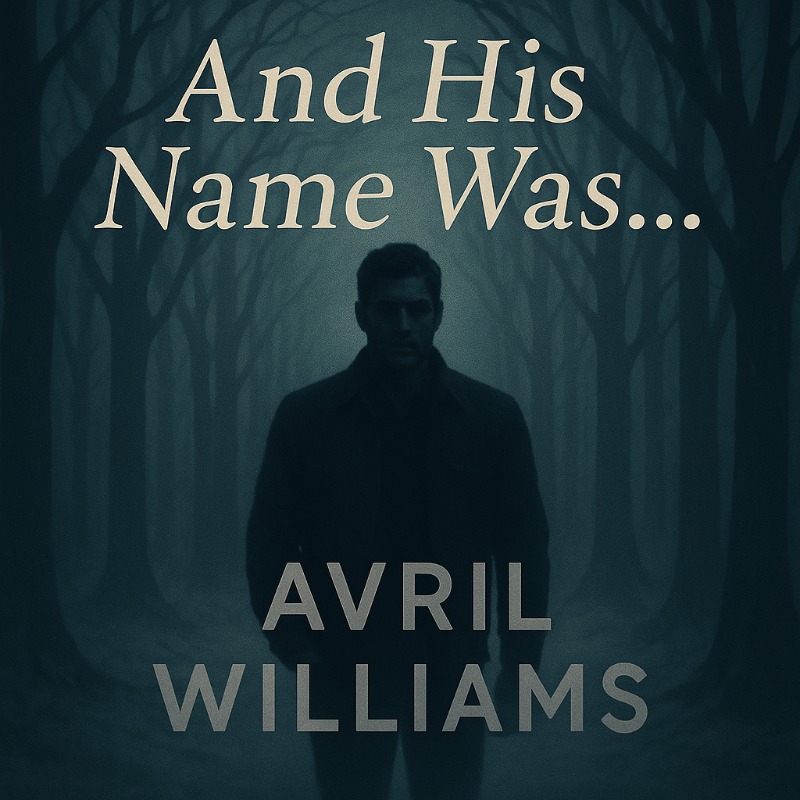
Above it all loomed a massive poster: And His Name Was... by Avril Williams, my name printed in crisp, bold letters below the haunting silhouette of a man standing in snow-covered woods.
It wasn’t my first book, but it was the one that changed everything.
Readers lined up with copies in hand, eager to ask the same question in a dozen different ways.
“Was he real?”
After that night in the cabin, I’d spent days chasing answers that never came. So I did the only thing I knew how to do—I wrote. I gave him a past, a purpose, a story that made sense when the truth didn’t. A world where mystery met heartbreak and left just enough room for hope.
The novel struck a chord, and my publisher was already nudging me for a sequel.
But there was one thing I still couldn’t do—not even in fiction. I couldn’t name him.
I tried, again and again. Nothing ever fit.
So he remained the stranger.
It was mid-afternoon, and I stepped away from the booth just to catch my breath. When I returned, something new sat among the neat stacks of unsigned books: a folded note.
My pulse skipped. I knew that handwriting. The same blue ink. The same confident slant:
Would love to know more about you, Avril, and maybe tell you a few things about me too.
Meet me at Ruth’s Café at 6 p.m.?
- Dean.
Dean.
I stared at the name with a quiet smile. Finally, I could put a name to the face that haunted my pages.
Now that is a name that actually suits him.






 React
React