---
**A Stranger Comes to Your Door**
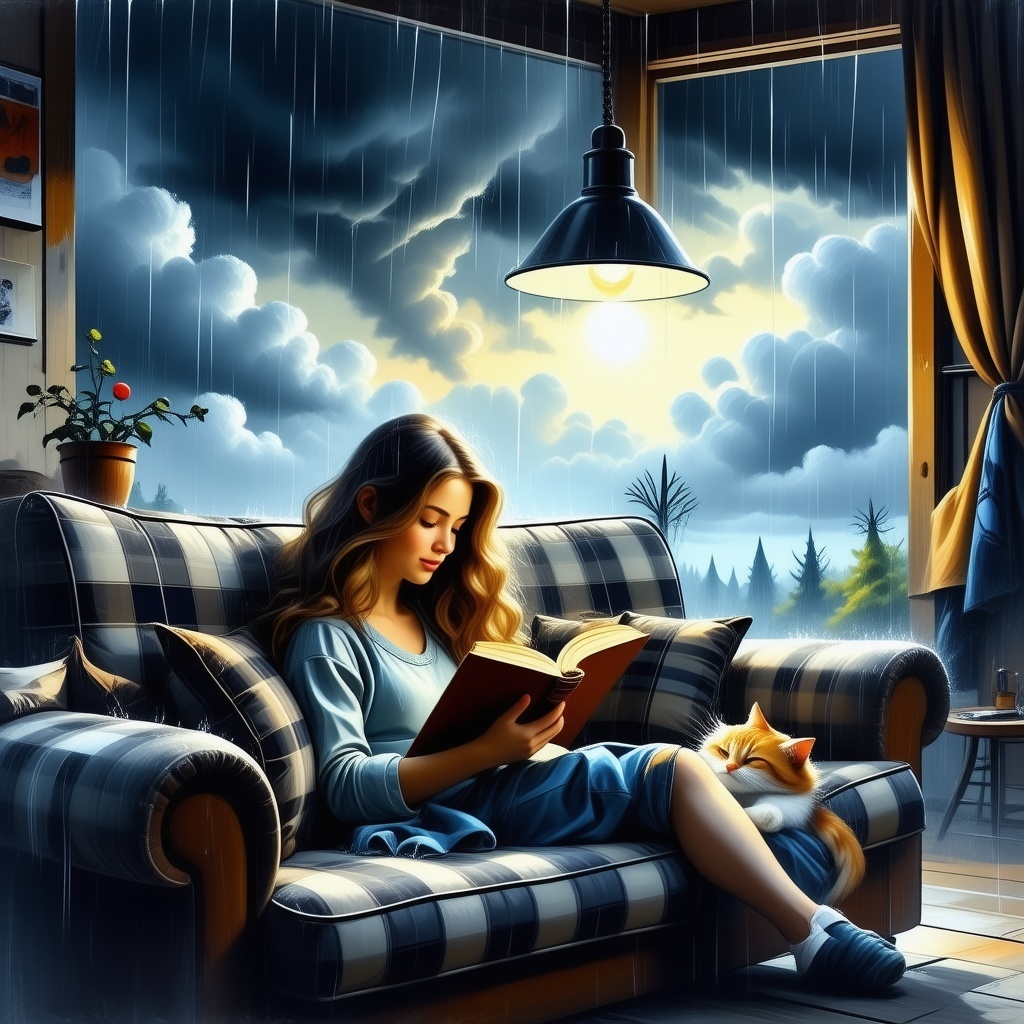
It was the kind of evening that made the world feel paused. The sky, heavy with gray, promised rain that hadn't yet come. Nora sat curled up on her old plaid couch, a mystery novel resting open on her lap. Her old cat, Pip, snored lightly at her feet. The peace of it all was comforting, predictable.
Then came the knock.
Three slow raps on the front door. Not the hurried kind of someone seeking help, nor the casual knock of a neighbor. Deliberate.
She frowned and checked the time—8:47 p.m. Too late for deliveries, and she wasn’t expecting anyone.
Another knock. This time, just two. Louder.
Nora stood, heart beating a little faster than she liked. She tiptoed to the door and peered through the peephole.
A man stood on her porch. Early thirties, maybe. Wearing a black jacket, his hood up. She couldn’t see much of his face. He had his hands behind his back—not threatening, but not exactly reassuring either.
She didn’t open the door. “Can I help you?”
“I’m sorry to disturb you,” he said. His voice was low and calm. “My car broke down a mile up the road. There’s no signal. I just need to call for a tow.”
Nora didn’t respond immediately. Her town was small—rural, quiet. The kind of place where people often left their doors unlocked. But she wasn’t a fool. She’d seen enough crime dramas to know how that turned out.
“Do you have ID?” she asked.
There was a pause. Then he chuckled, not unkindly. “That’s a first. I guess I could show you my driver’s license through the glass.”
“Stay where you are,” she said, a little firmer now.
He held his hands up—empty. “Sure thing.”
She kept her phone clutched in one hand and turned the deadbolt with the other. Cracking the door just an inch, she looked him over again. He wasn’t soaking wet, though it had started to drizzle. His shoes were clean. Too clean.
Something wasn’t right.
“Where’s your car?” she asked.
He gestured vaguely over his shoulder. “Half a mile back. Silver Corolla.”
“Interesting,” she said. “That road’s been closed since last week. Bridge repairs.”
The man blinked, and in that flicker of hesitation, Nora saw it—the truth slipping out.
“Look,” he said, voice softer, “I’m sorry. I didn’t mean to scare you. I’m just tired, and I’ve had a long day.”
But now she was fully alert. “You should leave. Right now. Before I call the police.”
“No need for that,” he said, and smiled. It was the smile that chilled her most—too easy, too practiced.
Then he took a step forward.
Nora slammed the door shut and threw the bolt. She ran to the living room, grabbing her phone, dialing 911 with shaking hands. Pip stirred at her feet, alarmed by her sudden movements.
“I need help,” she told the dispatcher. “There’s a man at my door. He lied about a car. I think he—”
And then she heard it. The back door creaking.
She dropped the phone.
Nora sprinted for the kitchen, heart pounding in her chest like a war drum. She grabbed the biggest knife from the drawer and crouched low behind the counter.
Footsteps. Light. Measured. Inside the house.
He hadn’t broken the lock—he’d used a key. How?
Her mind reeled. Had she left one under the mat? No. Had someone duplicated hers? She didn’t know. Couldn’t know.
“Don’t do anything stupid,” the man’s voice called out. Not angry—still calm, still composed.
“I’ve called the police,” she lied.
“I know.”
Silence. Only the ticking of the old wall clock and the rush of blood in her ears.
Then a whisper: “You don’t remember me, do you?”
Nora froze.
The voice was different now. Less confident. More personal.
“I was twelve. You came to the group home every Tuesday. You gave me books.”
Her mind spun backward—fifteen years, maybe more. She had volunteered back in college, helping out at a youth shelter two towns over. Weekly story hours, games, warm food.
“I—I remember the shelter,” she said.
“You read *The Wind in the Willows* to me.”
Then he stepped into the kitchen doorway. No weapon. Just standing there, wet hair hanging in his eyes. Sad.
“I just wanted to say thank you. That’s all.”
“You broke in,” she whispered.
“I didn’t know how else to do it,” he said. “I saw your name on a library mailing list last year. It took me a while to find you.”
She stared at him, trying to reconcile the strange with the familiar. The boy with the shy eyes. The man with the careful voice.
“I’ve lived a hard life,” he said. “Not all of it good. But those Tuesdays… they mattered. You mattered.”
A siren wailed in the distance. Closer.
“I should go,” he said, stepping backward. “I didn’t mean to scare you. I just—I thought you should know.”
And then he was gone, melting into the dark rain outside. By the time the police arrived, all that was left were faint footprints on the kitchen floor and the smell of rain on old wood.
They searched the area. Found no car. No sign of forced entry. Nothing to report.
That night, Nora sat awake, her book untouched, Pip curled beside her. She didn’t sleep. But not from fear.
From memory.






 React
React