Part 1: The Big Win and New Beginnings
Aria and Kiran had been best friends for as long as anyone could remember. From the first day of fifth grade, they sat next to each other in class, swapped stories during lunch, and stayed up late talking about their dreams. What connected them most was their passion for science and the desire to make the world a better place.
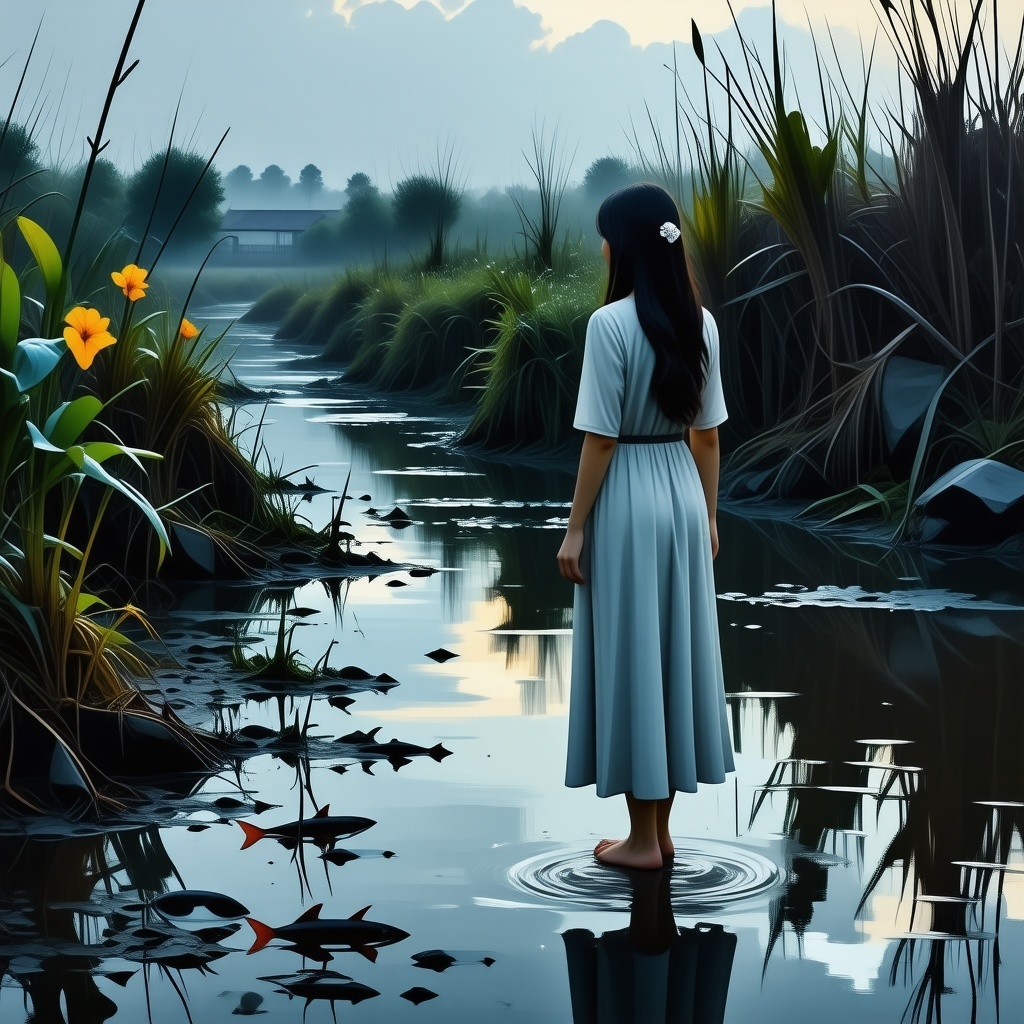
In their small town, the river that ran through the valley was once clear and full of life. Over the years, pollution had turned it murky and lifeless. Aria had seen the damage up close—fish dying, plants wilting, and families complaining about the dirty water. Together with Kiran, she dreamed of cleaning the river and restoring the beauty their home once had.
For two years, they worked on their project: an innovative eco-friendly filter made from natural materials that could trap pollutants and purify the water. They tested, failed, and tested again, always learning something new. Their dedication paid off when they entered the National Young Innovators Science Competition and won first prize.
The town erupted in celebration. Posters with their smiling faces covered the streets. The local newspaper hailed them as “The Future of Science.” Their families were proud beyond words. At the awards ceremony, as they accepted the shiny trophy, many whispered, “This is their happily ever after.”
But as they looked at each other in that moment of triumph, Aria and Kiran both wondered silently—what now?
After the big win, the world expected Aria and Kiran to keep shining. Everyone assumed success would bring happiness easily. But the truth was far more complicated.
The days that followed were confusing. Their lives no longer revolved around preparing for the competition or perfecting their invention. The river was still polluted, the challenges real, and the path forward uncertain.
Aria found herself restless. She would walk by the river every morning, staring at the dull gray water and remembering why she started this journey. Kiran, meanwhile, retreated into his room, surrounded by sketches of new inventions, dreaming of creating machines that could help people in other ways—robots to assist the elderly or devices to make life easier for the disabled.
At school, they returned to regular classes. Some classmates congratulated them, but others seemed distant, as if the magic of their win had faded. Even their friendship felt different; they were no longer united by a single goal but pulled by different dreams.
One afternoon, sitting on the old wooden bench by the riverbank, Aria finally spoke her thoughts aloud.
“Kiran, do you think everything will be okay? I thought winning would mean the hard part was over. But now it feels like we’re just starting something even harder.”
Kiran looked at her quietly, then nodded. “I thought winning would make life easier, too. But real change isn’t about trophies. It’s about hard work every day, even when no one’s watching.”
Aria sighed, “Sometimes, it feels like the whole world expects us to have all the answers.”
“Maybe we don’t,” Kiran said softly. “Maybe it’s okay to not know everything right now.”
Their friendship faced new tests. Aria wanted to focus on environmental activism—talking to villagers, organizing clean-up drives, and raising awareness. But convincing people was harder than she imagined. Many didn’t see pollution as a problem, or they were too busy with their own struggles to care.
Kiran, on the other hand, became fascinated with robotics. He joined a club and started building machines that could help those in need. But funding was scarce, and his first prototype failed during a school demonstration. The embarrassment stung deeply.
They met often to share their feelings. Some days, their conversations were full of hope and ideas. Other days, frustration and silence took over.
One evening, after a long day of disappointments, Aria asked, “Do you think our friendship will survive if our dreams take us different places?”
Kiran smiled gently. “Friendship isn’t about doing the same things. It’s about being there, supporting each other no matter where life leads.”
This promise kept them connected, even as their paths diverged.
Part 2: Trials and Triumphs
The months that followed their big win tested Aria and Kiran in ways neither of them had expected.
For Aria, the real work began when she started visiting villages along the river. She spoke to farmers, fishermen, and local families. She showed them the damage caused by pollution and tried to convince them to change their habits—stop dumping waste, plant trees along the banks, and protect the water.
But change was slow.
Many people didn’t see pollution as a problem worth worrying about. Some said, “We’ve lived here for generations, and the river has always been like this.” Others were too busy struggling to put food on the table to think about the environment.
Aria felt frustrated. “How can I help people who don’t want to help themselves?” she wondered aloud one evening while writing notes in her journal.
At school, Kiran wrestled with his own setbacks. His first robot prototype—a device meant to help people with limited mobility—had malfunctioned during a demonstration. The machine stopped working, making odd noises, and sending sparks flying. The audience had gasped, and some students snickered.
Kiran’s heart sank. He had spent weeks building the robot, believing it would be perfect. Now, all he felt was embarrassment and doubt.
His robotics club tried to encourage him. “Failure is part of the process,” said their mentor, Mr. Das. “The greatest inventors failed many times before succeeding. What matters is that you learn and keep trying.”
Kiran nodded but still felt the sting.
One afternoon, he shared his frustration with Aria.
“I don’t know if I’m cut out for this,” he admitted. “Maybe I’m better at dreaming than doing.”
Aria smiled gently. “I know how you feel. I’m struggling to convince people to care about the river. It’s like talking to a wall sometimes.”
They sat in comfortable silence, knowing they weren’t alone.
Despite the challenges, Aria and Kiran refused to give up. They found strength in each other’s courage.
Aria organized small clean-up drives with local students. Slowly, a few villagers joined. They planted saplings and set up signs asking people to keep the river clean. It wasn’t perfect, but it was progress.
Kiran rebuilt his robot from scratch. He studied programming, learned from his mistakes, and asked for help when he needed it. He even started a crowdfunding campaign, with Aria’s help spreading the word.
Little by little, his robots improved.
Their friendship deepened through this time of struggle. They celebrated small victories—a patch of riverbank free from trash, a robot that moved smoothly, a thank-you note from a grateful villager.
One evening, after a long day of work, they sat watching the sunset.
“Do you remember how we thought winning the competition would fix everything?” Aria laughed softly.
Kiran smiled. “Yeah, I guess the real journey begins after the trophies.”
They clinked their water bottles together in a small toast.
“To the journey,” Kiran said.
“To never giving up,” Aria added.
But life after “happily ever after” wasn’t just about victories.
There were setbacks, doubts, and moments of loneliness.
Once, Aria fell ill from exhaustion after weeks of non-stop work. Kiran took care of her, bringing soup and making sure she rested.
Another time, Kiran faced harsh criticism from a local newspaper that called his inventions “useless toys.” The words hurt deeply, but Aria reminded him of how far he had come.
“Remember why you started,” she said firmly. “Your dreams matter.”
They learned that true friendship means being there through both cheers and tears.






 React
React