Aarav had always felt like he didn’t fully belong to the present.
As a child, while his friends played cricket or chased cartoons, he was fascinated by stories of kings and empires. He would sit for hours reading about Mughal history, ancient wars, and architectural marvels. The past wasn’t a subject for him—it was a feeling. An echo inside his soul that never quite faded.
In school plays, he always chose the role of the king. Not for the attention, but because every word he spoke on stage felt like a memory. His teachers praised his passion; his classmates found it intense. At home, his parents often joked, “Maybe you were a king in your past life!”
But none of them knew that Aarav wasn’t joking when he smiled in silence.
One day, his school organized a trip to Agra. Aarav was thrilled. He had always dreamed of seeing the Taj Mahal in person. When the moment arrived and he stood before it, something strange happened.
He stared at the monument, his eyes filling with tears. His chest grew heavy. He walked slowly across the marble courtyard, his steps unsteady. Then suddenly, everything went dark.
Aarav had fainted.
When he woke up, his teacher was holding his hand. “Are you okay?” someone asked. But he couldn’t speak. His mind was elsewhere. Something inside him had stirred, and it refused to settle.
That night, he had a vivid dream.
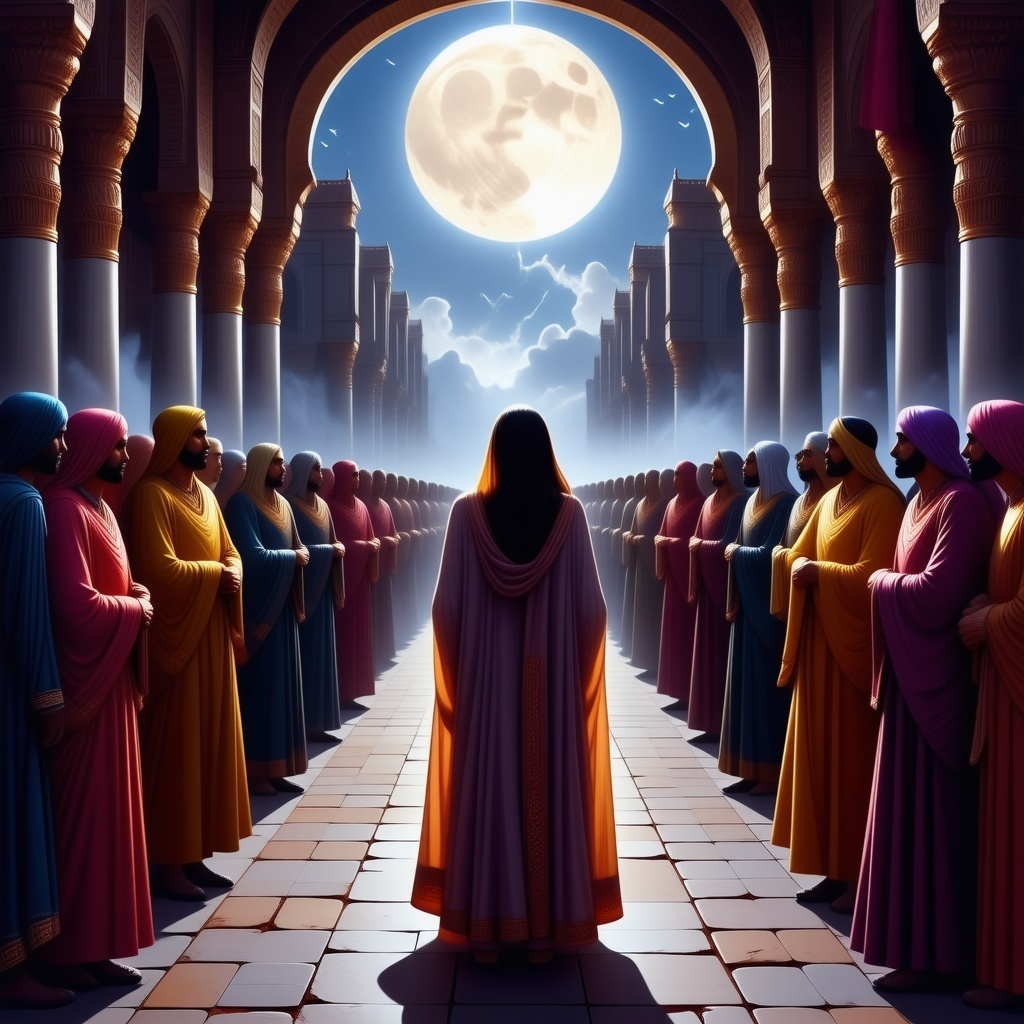
He stood in a grand palace, glowing under the moon. A graceful woman approached him, dressed in traditional Mughal attire. She didn’t speak, but her eyes held centuries of emotion. Then, in a soft haunting voice, she sang:
“Jo vada kiya, woh nibhaana padega…”
The line echoed again and again.
He woke up in sweat.
The dream returned the next night. And again the next. Each time, clearer. Each time, more painful. He stopped talking much. He became lost in thought, distracted, confused.
His family grew worried. Relatives began suggesting temples, doctors, even exorcism. “He’s not normal anymore,” they whispered.
Eventually, his parents took him to Dr. Mehra, a well-known psychologist who had experience with trauma and rare cases.
After listening carefully, Dr. Mehra leaned forward and said something unexpected.
“Aarav, what you’re describing doesn’t sound like delusion. It may be what’s called a past-life memory. I’ve seen it before. Sometimes, emotions and memories from a previous birth remain trapped inside the subconscious mind.”
Aarav was stunned. It sounded unreal—but it also made sense.
Dr. Mehra continued, “We can try past-life regression therapy. It’s a hypnosis-based technique that allows us to access those deeper memories. Would you like to try it?”
Aarav agreed without hesitation.
The session took place in a quiet, dimly lit room. Aarav lay down on a soft couch as calming music played in the background. Dr. Mehra’s voice guided him gently. “Breathe in… breathe out… let go… feel your body relax… drift back in time…”
Minutes passed. Then Aarav slipped into a deep trance.
Suddenly, the visions began.
He was not Aarav anymore. He was standing in royal robes, surrounded by guards and courtiers. The golden throne behind him, the power in his veins — he was the Mughal emperor Shah Jahan. And then, she appeared.
Mumtaz.
Her smile. Her voice. Her grace. He remembered their love. Not as a story, but as something he had lived. He saw her laughter, her warmth, the way she held his hand. And then—her death.
He relived the unbearable loss. The tears. The silence. The decision to honor her memory with something eternal. He saw the Taj being built — not just a structure, but a living promise carved into marble.
And then came the prison — the final years of Shah Jahan’s life, confined in Agra Fort, staring at the Taj Mahal through a tiny window, whispering those same words:
“Jo vada kiya, woh nibhaana padega…”
When Aarav awoke from hypnosis, he was silent for a long time. Tears rolled down his cheeks.
“I saw it,” he said quietly. “I felt it all. I was him.”
Dr. Mehra nodded. “Now you understand. The past sometimes returns to finish what was left incomplete.”
From that day, Aarav changed.
He no longer feared the dreams. Instead, he embraced them. He studied the Mughal era deeply. He wrote about love, memory, and identity. He returned to the Taj again — but this time not as a visitor. He stood before Mumtaz’s tomb with folded hands and closed eyes, his heart whispering the words he had once spoken as a grieving emperor.
Some people still called him strange. But others began to see something divine in his connection — a soul that had returned, not for glory, but for closure.
Aarav knew now that not every story ends with death.
Some continue beyond time.
Some promises outlive lifetimes.
And some monuments are not made of marble,
but of memory.
---
–Written by Kr. Ashwin






 React
React