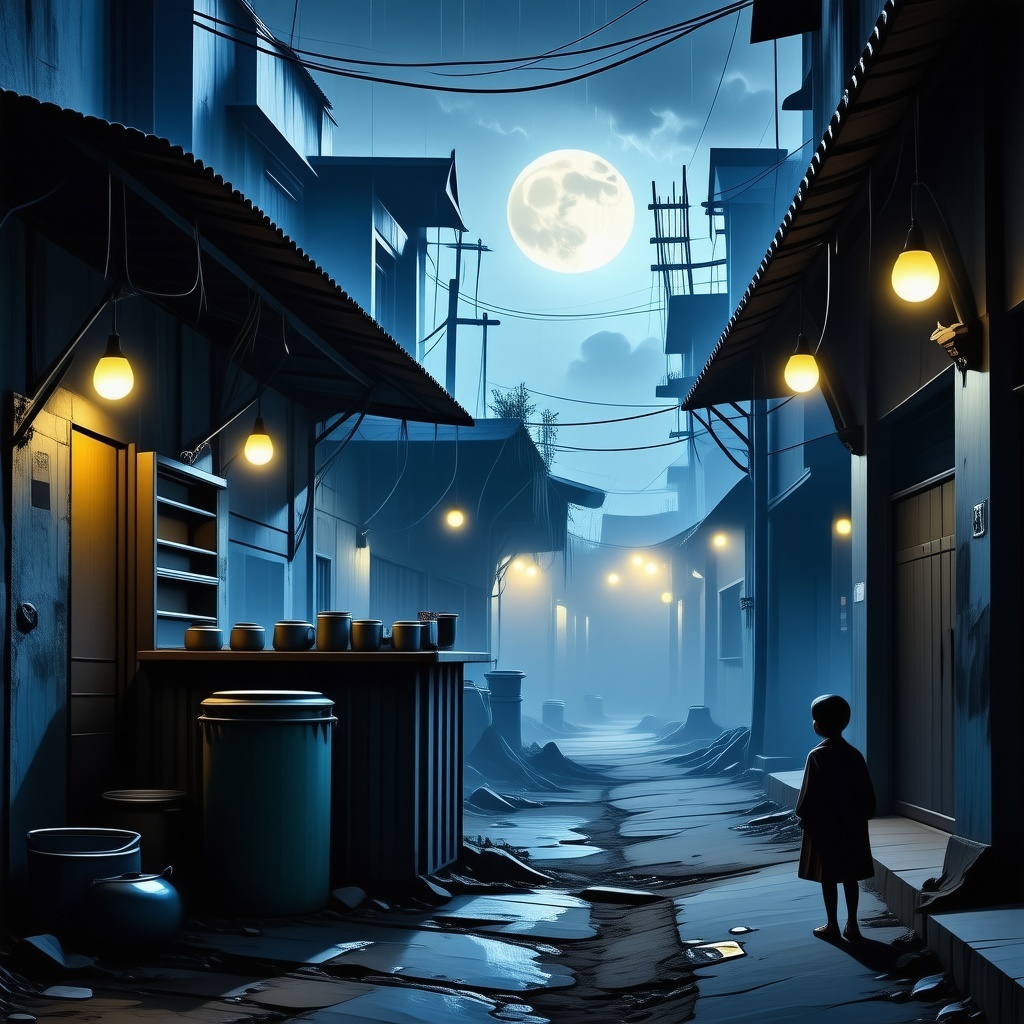
The clatter of chai glasses always seemed to echo louder in the back alleys of Bagdogra, a constant symphony against the hum of rickshaws and distant train whistles. Today, though, a different sound pierced through the familiar din – a hushed, urgent whisper from behind the overflowing bin next to my usual tea stall.
I’d just settled onto my rickety stool, ready to dive into my samosa, when the voices snagged my attention. They belonged to two men I recognized vaguely from the local market – one, a slick-haired fellow known for his overly enthusiastic sales pitches, the other, a quiet, gruff man who dealt in spices.
“The consignment arrives Tuesday, 3 AM,” the slick one murmured, his voice barely audible. “Near the old jute mill. Make sure the usual eyes are blind.”
The spice seller grunted. “Payment upfront. No tricks this time, Suresh.”
Consignment? Old jute mill? 3 AM? My samosa forgotten, a knot of unease tightened in my stomach. This wasn’t about cardamom or turmeric. The jute mill had been abandoned for decades, a crumbling relic of a bygone era, and the whisper in Suresh’s voice was laced with something colder than the morning mist.
My mind raced. What kind of “consignment” arrived in the dead of night at a derelict mill? And who were the “usual eyes” that needed blinding? A chill snaked down my spine. This had to be something illicit, something dangerous.
I debated. Should I ignore it? Pretend I hadn’t heard? But the words replayed in my head, an insistent drumbeat. What if someone was in danger? What if I could prevent something terrible from happening?
My decision made, I carefully paid for my untouched samosa and headed straight for the local police station. My heart hammered against my ribs with every step. The constable, a portly man named Sharma, initially looked at me with the weary skepticism reserved for habitual gossips.
“A consignment, you say, at the old jute mill?” he repeated, stroking his mustache. “At 3 AM?”
I nodded, my voice firm despite the tremor in my hands. “Yes, sir. And they talked about ‘blinding eyes.’ It sounded… serious.”
Constable Sharma’s expression slowly shifted. He picked up his pen, a flicker of professional interest replacing his initial disinterest. “Give me all the details you can remember, young man.”
I recounted everything, from Suresh’s hushed tone to the specific time and location. Constable Sharma listened intently, scribbling notes. He made a few calls, his voice low and serious. I could hear snippets of conversation – “suspect activity,” “stakeout,” “backup.”
That Tuesday, I couldn’t sleep. Every distant dog bark or rustle of leaves sent a jolt of adrenaline through me. The next morning, the local newspaper screamed the headline: “Major Contraband Bust at Old Jute Mill – Two Arrested.”
My eyes scanned the article, a wave of relief washing over me. The police had indeed raided the jute mill at 3 AM, intercepting a large shipment of illegal weapons. Suresh and the spice seller, identified as key players, were apprehended.
Later that day, Constable Sharma called me into the station. He looked at me with a newfound respect. “Your information was crucial, son. You averted a very dangerous situation. These weapons… they were meant for a large-scale operation.”
He paused, then added, “You did a brave thing. Most people would have just walked away.”
Walking away had been an option, yes. But something deep inside me, a flicker of civic duty, had compelled me to act. As I left the police station, the usual clatter of chai glasses seemed to carry a different tune – one of quiet triumph, of a small act making a
significant difference. I hadn’t just overheard something I wasn’t meant to; I had used it to rewrite a dangerous narrative, ensuring that for at least one night, the heart of Bagdogra beat a little safer.
The Ripple Effect
Life in Bagdogra, for me at least, didn't immediately go back to the familiar rhythm of chai and samosas. The story of the weapons bust spread like wildfire, and soon enough, whispers started. Not just about the bust itself, but about the "young man" who'd tipped off the police. It wasn't long before my tea stall became a little more popular than usual, with curious glances and hushed murmurs accompanying every order.
Constable Sharma, a man of his word, made sure my involvement was kept quiet officially, but in a town like Bagdogra, secrets have a way of seeping out. People I barely knew would nod to me with a strange glint in their eyes. Some offered me free cups of tea, others just stared, a mix of awe and trepidation on their faces. It was an odd feeling, being a local legend without ever having sought it.
The biggest change, however, was internal. The fear I'd felt that Tuesday morning had transformed into something else – a quiet confidence. I realized that even a seemingly insignificant individual could make a tangible difference. The world wasn't just happening to me; I could, in my own small way, shape it.
My perspective on everyday sounds shifted too. The symphony of Bagdogra – the rickshaw bells, the train whistles, the chai glasses – now carried an additional layer of meaning. I found myself listening more intently, not out of paranoia, but out of a heightened awareness, a recognition that important details often hide in plain sight, or in the softest whispers.
A few weeks later, I was back at my usual tea stall, sipping a fresh cup, when Constable Sharma stopped by. He wasn't on duty, and he looked less like a stern officer and more like a tired, satisfied man.
"Heard you've become quite the local hero," he chuckled, nudging me playfully.
I shrugged, a faint blush creeping up my neck. "Just did what anyone should, sir."
He nodded, his smile fading slightly.
"Not everyone does. But I wanted to tell you, the information you gave us helped dismantle a much larger network. Those weapons were destined for something truly ugly, across the border." He paused, looking out at the bustling street. "You saved lives, son. More than you know."
That revelation hit me harder than the newspaper headlines. It wasn't just a bust; it was a disruption of something far more sinister. The weight of that knowledge was immense, but it also brought a profound sense of purpose.
From that day on, I continued with my routine, but with a sharper sense of responsibility. I started volunteering at a local youth center, teaching basic literacy, hoping to empower others to find their voice, just as I had found mine. I became more involved in community issues, speaking up when I saw something amiss, however small.
The "unheard whisper" had done more than just solve a crime; it had awakened something within me. It taught me that sometimes, the most important moments in life aren't grand pronouncements, but quiet observations. And that courage isn't the absence of fear, but the decision to act despite it.
Thankyou
Written by - Harshika
Class - 6V






 React
React