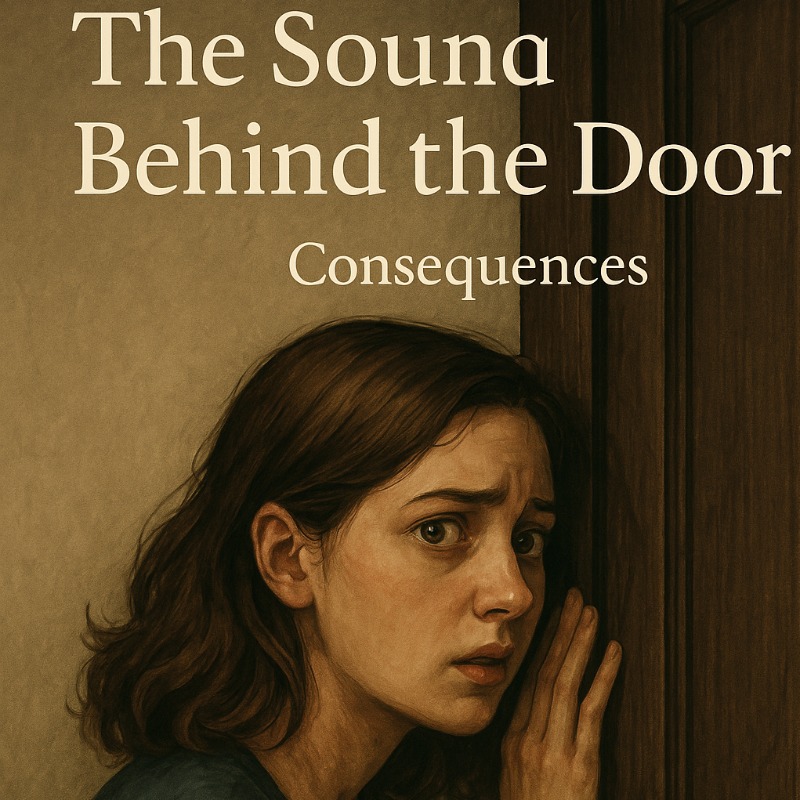
Part One: The Door
Eleanor Marsh was the last person you'd expect to uncover a scandal. Forty-three, quiet, meticulous, and a mid-level accountant at Braylock Pharmaceuticals, she lived by the book. Her life was as predictable as the city bus schedule she followed every morning. She wore the same beige overcoat each winter, packed the same lunch—turkey on rye—and never left a report incomplete.
That Tuesday, she stayed late to finish reconciling a report for Q4. Everyone else had gone home. The building was silent except for the low hum of the fluorescent lights overhead. Her office faced the corridor that ran along the executive wing—off-limits for most employees after hours.
As she walked past Conference Room C, she heard voices.
The door was slightly ajar. Not enough to see anyone. But enough for the sound to carry.
"...We can’t risk exposure. If that data gets out, we’re liable."
Eleanor slowed, instinct urging her to move on. But curiosity and something deeper—unease—rooted her feet to the floor.
A second voice responded, rougher. "Then scrub it. Reclassify the results. The new version shows 78ïficacy. That’s what we go with."
A pause. Then the first voice again:
"It’s a cancer trial. These patients are terminal. If the drug’s toxicity—"
"You want to lose your job? Or do you want stock options when this thing hits the market?"
Eleanor’s blood ran cold.
She stepped back, heart hammering, and walked quickly to the stairwell. The door closed quietly behind her.
She didn’t sleep that night.
Part Two: The Conflict
The next morning, the office buzzed with normalcy. Coffee. Keyboards. Monday’s meeting rescheduled again. But Eleanor sat frozen at her desk.
She had overheard something she was never meant to know: a conversation about falsifying clinical trial results for Oncomere, Braylock’s upcoming cancer drug. The launch was in less than sixty days. The company’s valuation had doubled in the last quarter alone.
She searched the internal database. Her access was limited, but she found references to Study B57: the final-phase trial for Oncomere. The efficacy report listed 78% success.
There were no adverse event logs. No toxicity flags.
She knew what she heard. They had erased the truth.
And now she had a choice: say nothing and preserve the life she’d built—or speak out and risk everything.
Part Three: The Whisper
She confided in one person: Mark, her friend in Compliance. They had shared cubicle walls for six years.
"I heard them, Mark. They’re burying something. If that drug is dangerous—"
"Eleanor," he interrupted, voice low. "Don’t repeat this to anyone else. Please. You have no idea how deep this goes."
"You believe me?"
He hesitated. "I believe you heard something. But this company’s got lawyers like wolves. You go after them, you better have proof. Or you’ll be eaten alive."
He glanced around, then leaned closer. "Get backup. Evidence. Don’t talk to anyone else until you do."
Part Four: The Proof
Eleanor went digging.
Late nights. Early mornings. She studied email headers, document timestamps, and internal audit trails. She didn’t download anything—just notes. Quiet observations. Even in paranoia, she double-checked her screen wasn’t being recorded.
Then she noticed something odd: a discrepancy in file versions.
The Q3 trial summary had two metadata entries—one archived at 11:12 p.m., two nights before the official file was released.
The earlier version had never been made public.
Eleanor submitted a data restoration request under the guise of recovering old formatting for a quarterly presentation.
Two days later, she had it.
The original file listed efficacy at 42%.
And twelve patient deaths.
She took pictures with her old camera—no cloud backups, no traceable apps. Paper copies were hidden inside a sewing kit under her bed.
Part Five: The Leak
She printed the report.
Held it in shaking hands.
Then she called the number she never thought she’d dial: The Sentinel, a national investigative outlet.
"I have something," she told the journalist. "It’s about a drug trial. People died. They covered it up."
They arranged a meeting at a diner two towns over. She wore sunglasses. Paranoid but determined.
Eleanor passed over the report and her notes.
"You understand the risk?" the reporter asked.
"Yes."
And she did.
Because silence was no longer an option.
Part Six: The Storm
The story hit headlines three weeks later:
Whistleblower Reveals Alleged Cover-Up in Braylock Cancer Trial.
Within hours, Braylock’s stock plummeted. The FDA opened a formal investigation. TV anchors said Eleanor’s name out loud. News vans camped outside her apartment.
The company issued a denial. She was placed on unpaid leave. Her inbox flooded with threats. Her landlord asked her to vacate "for safety."
Colleagues froze her out. Old friends disappeared. Only Mark texted:
You did the right thing. But be careful.
Her world unraveled.
But the families of the twelve patients reached out, too.
Thanking her.
One wrote:
“We knew something was wrong. No one believed us. You gave us a voice.”
Part Seven: The Inquiry
Congressional hearings followed. Executives were subpoenaed. The internal documents she’d noted were authenticated.
The CEO resigned.
Eleanor testified. She sat before a semicircle of senators, cameras clicking.
Nervous. Resolute.
When asked why she came forward, she simply said:
"I heard something I wasn’t supposed to. And once I knew the truth, I couldn’t pretend I didn’t."
It wasn’t just about numbers. It was about twelve lives. And the ones that might be lost if the drug went to market unchecked.
The hearings revealed years of corner-cutting. A whistleblower from another department followed Eleanor’s example. New policies were introduced.
Part Eight: The Aftermath
A year later, Braylock was under new leadership. Oncomere was shelved pending a complete review. Multiple executives faced criminal charges.
Eleanor? She was offered book deals. TV interviews. She declined most.
Instead, she joined a nonprofit advocating for ethics in clinical trials. Quietly. Purposefully. She gave talks to med students about transparency and responsibility. Her name became synonymous with integrity.
Still, life wasn’t easy. She moved to a smaller town, lived on modest means, and took consulting gigs under pseudonyms. Fame never suited her.
But her conscience was clear.
Every now and then, she still walks past Conference Room C in memory.
Still hears the echo of those voices.
But now, she no longer turns away.