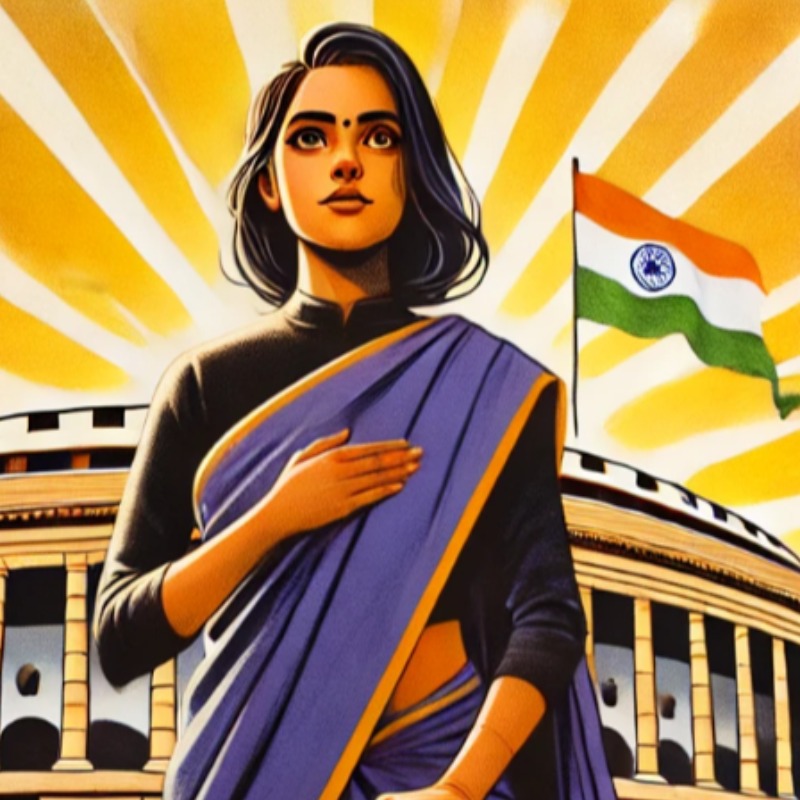
Amina stood on the school’s crumbling steps, her tattered notebook clutched tightly to her chest. In the crowded alleyways of her small village, dreams were considered a luxury. But she dared to dream big—bigger than anyone else. She wanted to change the world.
At home, her mother stitched clothes late into the night while her father worked odd jobs. Education for girls in their community was rare, but Amina’s hunger for knowledge burned brighter than the oil lamp she read under. When her teacher handed her a copy of the Indian Constitution, it was like holding a piece of magic. It spoke of rights—of equality and justice—and planted a seed in her heart.
Amina stood on the school’s crumbling steps, her tattered notebook clutched tightly to her chest. In the crowded alleyways of her small village, dreams were considered a luxury. But she dared to dream big—bigger than anyone else. She wanted to change the world.
At home, her mother stitched clothes late into the night while her father worked odd jobs. Education for girls in their community was rare, but Amina’s hunger for knowledge burned brighter than the oil lamp she read under. When her teacher handed her a copy of the Indian Constitution, it was like holding a piece of magic. It spoke of rights—of equality and justice—and planted a seed in her heart.
"You think a girl like you could ever make a difference?" her neighbor scoffed when Amina shared her ambitions. But Amina only smiled. She had learned early that the loudest voices of doubt came when you stood closest to your dreams.
Despite the taunts, Amina excelled in her studies. She spent nights pouring over textbooks, determined to rise above the limitations imposed on her. At sixteen, she won a scholarship to a prestigious university—a place where her small-town roots seemed out of place among students from elite families.
The first year was brutal. She struggled to keep up with her classmates, whose confidence seemed effortless. English debates left her tongue-tied, and every failure felt like a reminder that she did not belong. But Amina refused to quit. She spent hours in the library, improving her language skills, and volunteered to work on community outreach programs.
One day, during a heated debate on educational inequality, Amina stood up. Her voice trembled at first but grew steadier with every word. She spoke not from textbooks but from her own experience—the shame of wearing hand-me-down uniforms, the sting of being told her dreams were impossible. When she finished, the auditorium fell silent. That day, she earned more than applause. She earned respect.
From that moment on, Amina knew her path was in public service. She graduated with top honors in political science and joined a grassroots organization advocating for education in marginalized communities. Her tireless work caught the attention of a progressive political party, and soon, she found herself campaigning for a seat in the local assembly.
Her candidacy was met with skepticism. Critics called her inexperienced. Opponents mocked her minority background. But Amina knew the struggles of the people she represented. She walked through villages, listening to stories of broken systems and forgotten promises. Her message was simple: Every voice matters.
Election day arrived, and against all odds, Amina won. At 28, she became the youngest member of the state assembly. But the real work was just beginning. She fought tirelessly to pass education reforms, ensure scholarships for girls, and improve healthcare in underprivileged areas. Her dedication earned her the title of "The People’s Voice."
Yet, the higher she climbed, the more resistance she faced. Political veterans dismissed her as an idealist. Corrupt officials tried to undermine her efforts. But Amina’s spirit was unyielding. With every setback, she grew stronger, more determined to break the barriers that held others back.
When she announced her candidacy for Parliament, few believed she could win. But once again, Amina defied expectations. Her campaign was a movement—people from all walks of life rallied behind her. She didn’t promise miracles; she promised to listen, to fight, and to never forget where she came from.
Victory in the parliamentary elections propelled her into the national spotlight. Amina became a beacon for those who had been told they didn’t belong. She championed laws to protect minority rights, expand educational opportunities, and empower women across the country. With each passing year, her vision grew bolder.
And then came the day when a coalition of progressive leaders approached her with a proposition that once seemed impossible—running for the highest office in the land.
The presidential campaign was grueling. Pundits claimed the country wasn’t ready for a woman from a minority background to hold the nation’s most prestigious office. Opponents dredged up her humble beginnings, twisting them into reasons she was unfit to lead. But Amina refused to be silenced.
In her final campaign speech, she stood before a sea of supporters and spoke from the heart. "I was once a girl with a tattered notebook and a dream no one believed in. Today, I stand before you because every voice deserves to be heard. This is not just my journey—it is ours. And together, we can write a future where no child is told they cannot dream."
The world watched as the votes were counted. When the final tally was announced, history had been made. Amina Verma was elected as the first woman from a minority background to serve as the President of India.
As she placed her hand on the Constitution that had first ignited her dreams, Amina knew her story was more than just her own. It was a beacon for every girl told she could not—proof that the impossible was only a beginning.