
Experience reading like never before
Read in your favourite format - print, digital or both. The choice is yours.
Track the shipping status of your print orders.
Discuss with other readersSign in to continue reading.

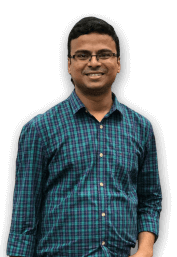
"It was a wonderful experience interacting with you and appreciate the way you have planned and executed the whole publication process within the agreed timelines.”
Subrat SaurabhAuthor of Kuch Woh PalDr. Sas Biswas is a distinguished forestry scientist with over 50 years of experience in research, education, and training. With 150+ publications, including bestselling books, he has guided numerous postgraduate and postdoctoral scholars across forestry and life sciences. A former Head of the Botany Department at the Forest Research Institute (ICFRE- FRI), Dehradun, he has also served as an FAO Fellow, Consultant to the National Biodiversity Authority, and Visiting Professor at leading forestry institutions across India and abroad. Dr. Biswas has contributed extensively to global initiatives Read More...

Dr. Sas Biswas is a distinguished forestry scientist with over 50 years of experience in
research, education, and training. With 150+ publications, including bestselling books, he
has guided numerous postgraduate and postdoctoral scholars across forestry and life
sciences. A former Head of the Botany Department at the Forest Research Institute (ICFRE-
FRI), Dehradun, he has also served as an FAO Fellow, Consultant to the National Biodiversity
Authority, and Visiting Professor at leading forestry institutions across India and abroad.
Dr. Biswas has contributed extensively to global initiatives on forest and urban biodiversity,
invasive alien species, bamboo and rattan conservation, and forestry-based tourism, with
impactful work across Europe, South America, Africa, China, and the Indo-Malaysian region.
His notable contributions include work with the International Poplar Commission, CBD-
COP7, and conservation planning at heritage sites such as Ta Phrom (Cambodia), Bodh Gaya.
Beyond his scientific achievements, Dr. Biswas is widely known in Dehradun for his much-
loved “Tree Tales” where his passion for teaching shines through storytelling that connects
natural history and cultural aspects of plants and trees. Presently, he serves as President of
EcoSanskriti and as a visiting Professor of Forestry at Dolphin PG Institute Biomedical &
Natural Sciences, Dehradun, and IMPRI Impact and Policy Research Institute, New Delhi.
Read Less...
Manual of Indian Dendrology fills a real gap in forestry education. It brings together classical taxonomy and modern trends in systematics, drawing on allied disciplines. This book comes at a time when our relationship with forests needs to move beyond resource extraction toward knowledge and coexistence. Dr. Biswas has documented how these trees and shrubs are interwoven with the lives of local and ethnic communities, for food, medicine, fibre, and faith. By
Manual of Indian Dendrology fills a real gap in forestry education. It brings together classical taxonomy and modern trends in systematics, drawing on allied disciplines. This book comes at a time when our relationship with forests needs to move beyond resource extraction toward knowledge and coexistence. Dr. Biswas has documented how these trees and shrubs are interwoven with the lives of local and ethnic communities, for food, medicine, fibre, and faith. By doing so, he brings back a dimension often missing in technical forestry - the relationship between biodiversity and people. I am confident it will encourage students, foresters, and nature enthusiasts alike to observe our trees more closely and value them as essential partners in ecological balance and rural livelihoods…
- Dr. Anil Joshi, Padma Bhushan & Padma Shri Awardee
Manual of Indian Dendrology fills a real gap in forestry education. It brings together classical taxonomy and modern trends in systematics, drawing on allied disciplines. This book comes at a time when our relationship with forests needs to move beyond resource extraction toward knowledge and coexistence. Dr. Biswas has documented how these trees and shrubs are interwoven with the lives of local and ethnic communities, for food, medicine, fibre, and faith. By
Manual of Indian Dendrology fills a real gap in forestry education. It brings together classical taxonomy and modern trends in systematics, drawing on allied disciplines. This book comes at a time when our relationship with forests needs to move beyond resource extraction toward knowledge and coexistence. Dr. Biswas has documented how these trees and shrubs are interwoven with the lives of local and ethnic communities, for food, medicine, fibre, and faith. By doing so, he brings back a dimension often missing in technical forestry - the relationship between biodiversity and people. I am confident it will encourage students, foresters, and nature enthusiasts alike to observe our trees more closely and value them as essential partners in ecological balance and rural livelihoods…
- Dr. Anil Joshi, Padma Bhushan & Padma Shri Awardee
Are you sure you want to close this?
You might lose all unsaved changes.
India
Malaysia
Singapore
UAE
The items in your Cart will be deleted, click ok to proceed.