
Experience reading like never before
Read in your favourite format - print, digital or both. The choice is yours.
Track the shipping status of your print orders.
Discuss with other readersSign in to continue reading.

"It was a wonderful experience interacting with you and appreciate the way you have planned and executed the whole publication process within the agreed timelines.”
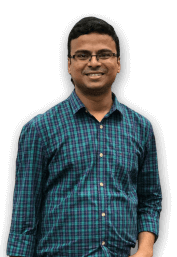
Subrat SaurabhAuthor of Kuch Woh PalChandrashekar Babu is a veteran Free and Open Source Software technologist and independent systems thinker with over thirty years immersed in Linux kernel development, systems programming, and global open-source infrastructure training. An autodidact since his teens, his parallel lifelong inquiry—ignited by Carl Sagan’s Cosmos—has spanned physics, evolutionary biology, human history, economics, and philosophy, always seeking the deep patterns that connect particles to life, universe and intelligence itself. Read More...
Chandrashekar Babu is a veteran Free and Open Source Software technologist and independent systems thinker with over thirty years immersed in Linux kernel development, systems programming, and global open-source infrastructure training.
An autodidact since his teens, his parallel lifelong inquiry—ignited by Carl Sagan’s Cosmos—has spanned physics, evolutionary biology, human history, economics, and philosophy, always seeking the deep patterns that connect particles to life, universe and intelligence itself.
Read Less...
Artificial intelligence did not arrive by accident.
It is the consequence of a long evolutionary process—one that began with chemistry learning to remember, accelerated through human tools and institutions, and now approaches a critical threshold where intelligence itself becomes a selectable, non-biological substrate.
In The Turing Threshold, Chandrashekar Babu reframes AI not as a conscious machine or an existential threat, but as a structura
Artificial intelligence did not arrive by accident.
It is the consequence of a long evolutionary process—one that began with chemistry learning to remember, accelerated through human tools and institutions, and now approaches a critical threshold where intelligence itself becomes a selectable, non-biological substrate.
In The Turing Threshold, Chandrashekar Babu reframes AI not as a conscious machine or an existential threat, but as a structural inevitability: the outcome of systems that reward speed, scale, and recursive optimization over biological limits. Drawing on physics, evolutionary biology, history, economics, and computer science, the book traces how intelligence has steadily externalized itself—from muscle to memory, from symbols to silicon—and why that process now approaches a point of no return.
This is not a story of human obsolescence, but of structural continuity.
It gestures toward an interstellar future—where cognition persists beyond biology, geography, and epoch—carried forward by the very systems we are now setting in motion.
This is not a book about what the future should be.
It is about what futures remain possible once the threshold is crossed.
Artificial intelligence did not arrive by accident.
It is the consequence of a long evolutionary process—one that began with chemistry learning to remember, accelerated through human tools and institutions, and now approaches a critical threshold where intelligence itself becomes a selectable, non-biological substrate.
In The Turing Threshold, Chandrashekar Babu reframes AI not as a conscious machine or an existential threat, but as a structura
Artificial intelligence did not arrive by accident.
It is the consequence of a long evolutionary process—one that began with chemistry learning to remember, accelerated through human tools and institutions, and now approaches a critical threshold where intelligence itself becomes a selectable, non-biological substrate.
In The Turing Threshold, Chandrashekar Babu reframes AI not as a conscious machine or an existential threat, but as a structural inevitability: the outcome of systems that reward speed, scale, and recursive optimization over biological limits. Drawing on physics, evolutionary biology, history, economics, and computer science, the book traces how intelligence has steadily externalized itself—from muscle to memory, from symbols to silicon—and why that process now approaches a point of no return.
This is not a story of human obsolescence, but of structural continuity.
It gestures toward an interstellar future—where cognition persists beyond biology, geography, and epoch—carried forward by the very systems we are now setting in motion.
This is not a book about what the future should be.
It is about what futures remain possible once the threshold is crossed.
Are you sure you want to close this?
You might lose all unsaved changes.
India
Malaysia
Singapore
UAE
The items in your Cart will be deleted, click ok to proceed.