
Experience reading like never before
Read in your favourite format - print, digital or both. The choice is yours.
Track the shipping status of your print orders.
Discuss with other readersSign in to continue reading.

"It was a wonderful experience interacting with you and appreciate the way you have planned and executed the whole publication process within the agreed timelines.”
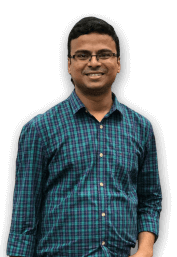
Subrat SaurabhAuthor of Kuch Woh PalDr. Kandiah Sivakumar has nurtured a lifelong passion for the art and architecture of theIndian subcontinent. Over the years, he has visited numerous sites renowned for their richartistic and architectural heritage, deepening his appreciation and understanding of the region’scultural legacy. Dr. Sivakumar completed medical training in Sri Lanka and, after seven years working in theHealth Service, moved to the UK. He worked as a Consultant Psychiatrist for almost forty years, served as anAssociate Dean of the Royal College of Psychiatrists, and held several other important positions. He contiRead More...

Dr. Kandiah Sivakumar has nurtured a lifelong passion for the art and architecture of the
Indian subcontinent. Over the years, he has visited numerous sites renowned for their rich
artistic and architectural heritage, deepening his appreciation and understanding of the region’s
cultural legacy.
Dr. Sivakumar completed medical training in Sri Lanka and, after seven years working in the
Health Service, moved to the UK. He worked as a Consultant Psychiatrist for almost forty years, served as an
Associate Dean of the Royal College of Psychiatrists, and held several other important positions.
He continued his interest in the Art and Archaeology of the Indian subcontinent under the guidance of
Padmashree Dr. John Marr and Mrs Wendy Marr. He obtained the Bharatiya Vidya Bhavan Certificate and
completed an MA in the History of Art and Archaeology (South and Southeast Asia) at the School of Oriental
and African Studies (SOAS), University of London.
Dr. Sivakumar later became a Research Scholar at the Department of Sculpture, Tamil University, Thanjavur,
India, and completed a PhD there. His thesis, under the supervision of Professor K. Kandan, was on the
Architecture and Iconography of the Gōpuras of the Thiruvārūr Tyagarājaswāmy temple. He has a series of
publications related to his interests.
He has been devotedly involved in temple restorations in Sri Lanka. In the UK, he has a keen interest in
and has been an enthusiastic supporter of Cultural events such as Bharatanatyam and Carnatic music
recitals. He is a Fellow of the Royal Society of Arts (UK). He is currently the convenor for the Dr. John and
Mrs. Wendy Marr Arts History modules at the Bharatiya Bhavan, London.
Read Less...
The Thiruvārūr Tyagarajaswamy Temple is notable for its eight prominent Gōpuras, including four at the cardinal directions and four additional towers. These structures are embellished with more than 1,000 sculptures, carved from stone and stucco, that represent a rich tapestry of puranic legends and historical narratives. The artistry on display is remarkable, with most sculptures capturing stories through profound symbolism, expressive gestures, and intric
The Thiruvārūr Tyagarajaswamy Temple is notable for its eight prominent Gōpuras, including four at the cardinal directions and four additional towers. These structures are embellished with more than 1,000 sculptures, carved from stone and stucco, that represent a rich tapestry of puranic legends and historical narratives. The artistry on display is remarkable, with most sculptures capturing stories through profound symbolism, expressive gestures, and intricate visual composition.
While most sculptures boast exceptional craftsmanship and thoughtful placement, a few display less intricate workmanship or less ideal placement, but all remain valuable cultural artefacts. The absence of detailed documentation of their creation complicates precise dating.
In this book, Dr. Sivakumar delves into the art and architecture of the Thiruvārūr Gōpuras, emphasising how these monumental structures exemplify profound devotion and remarkable creativity. His examination reveals how the Gōpuras serve as testaments to India’s extensive spiritual and artistic heritage. The intricate details and symbolic aspects of the sculptures are explored to highlight how both faith and creative ingenuity have been interwoven into their making, reflecting a tradition that has evolved and flourished over centuries.
Are you sure you want to close this?
You might lose all unsaved changes.
India
Malaysia
Singapore
UAE
The items in your Cart will be deleted, click ok to proceed.