Share this book with your friends

Reclaiming Forgotten Narratives

Author Name: Sangita Rayamajhi | Format: Paperback | Genre : Literature & Fiction | Other Details

Sheeba once believed her future would start in a university classroom. Instead, it opened into a marriage arranged by her parents, in a house shaped by her mother’s rules and her husband's distance. Years pass. Children grow. And somewhere between obligation and longing, Sheeba learns to make room for her cousin Praneeta; for the housemaid’s family, whose silence carries more history than she was raised to see; and for a past love, Kirtijay, whose return stirs a grief that never fully left.

Set in Kathmandu and a farming village near the Indian border, this novel moves between the present and a past that refuses to stay buried. It steps through rooms where memory clings to old furniture, and into fields where class and caste shaped the first stories Sheeba ever heard. 

Women in this book carry each other, sometimes with care, sometimes with the weight of betrayal. Some find safety. Some do not. As the ties between privilege and harm come into sharper view, Sheeba begins to see her life not as a sequence of choices, but as a house full of thresholds she crossed without knowing.

This is a story of what stays, after migration, after heartbreak, after silence. It does not seek redemption. It pays attention.

Read More...
Paperback

Ratings & Reviews

0 out of 5 ( ratings) | Write a review
Write your review for this book
Paperback 195

Inclusive of all taxes

Delivery

Item is available at

Enter pincode for exact delivery dates

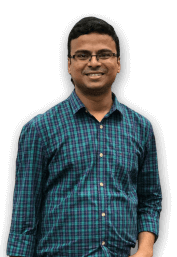
Sangita Rayamajhi

Dr. Sangita Rayamajhi’s life has moved through lecture halls, border crossings, and homes where memory does not sit still. As the first woman in Nepal to receive a PhD in English Literature, her academic path opened early and stretched wide, from Tribhuvan University in Kathmandu to Claremont, California, and across to the Asian University for Women in Chittagong, where she teaches literature and gender studies today.

While she has written extensively on women’s roles, structural violence, and cultural memory, this novel stands apart. It reaches into rooms she has passed through herself, where love was unfinished, where silence spoke louder than laws, where women bore the weight of other people’s choices. Writing it meant returning to things not yet resolved, and letting fiction carry truths that footnotes cannot hold.

Her previous work includes "Can a Woman Rebel?", "Who is the Daughter of Nepal?", and "All Mothers are Working Mothers", alongside co-authored research on violence against women worldwide. She has held fellowships with the Fulbright Foundation, the National Endowment for the Humanities, and the Scholar Rescue Fund, and she remains active as Director of CASSA and SAFAR, two centers dedicated to South Asian research.

What she teaches in classrooms often begins in the lives of those who never enter one. This book belongs to them, too.

Read More...

Achievements